Czech Television Habits 2026 – What Families Really Watch at Home
Estimated reading time: 13 minutes.
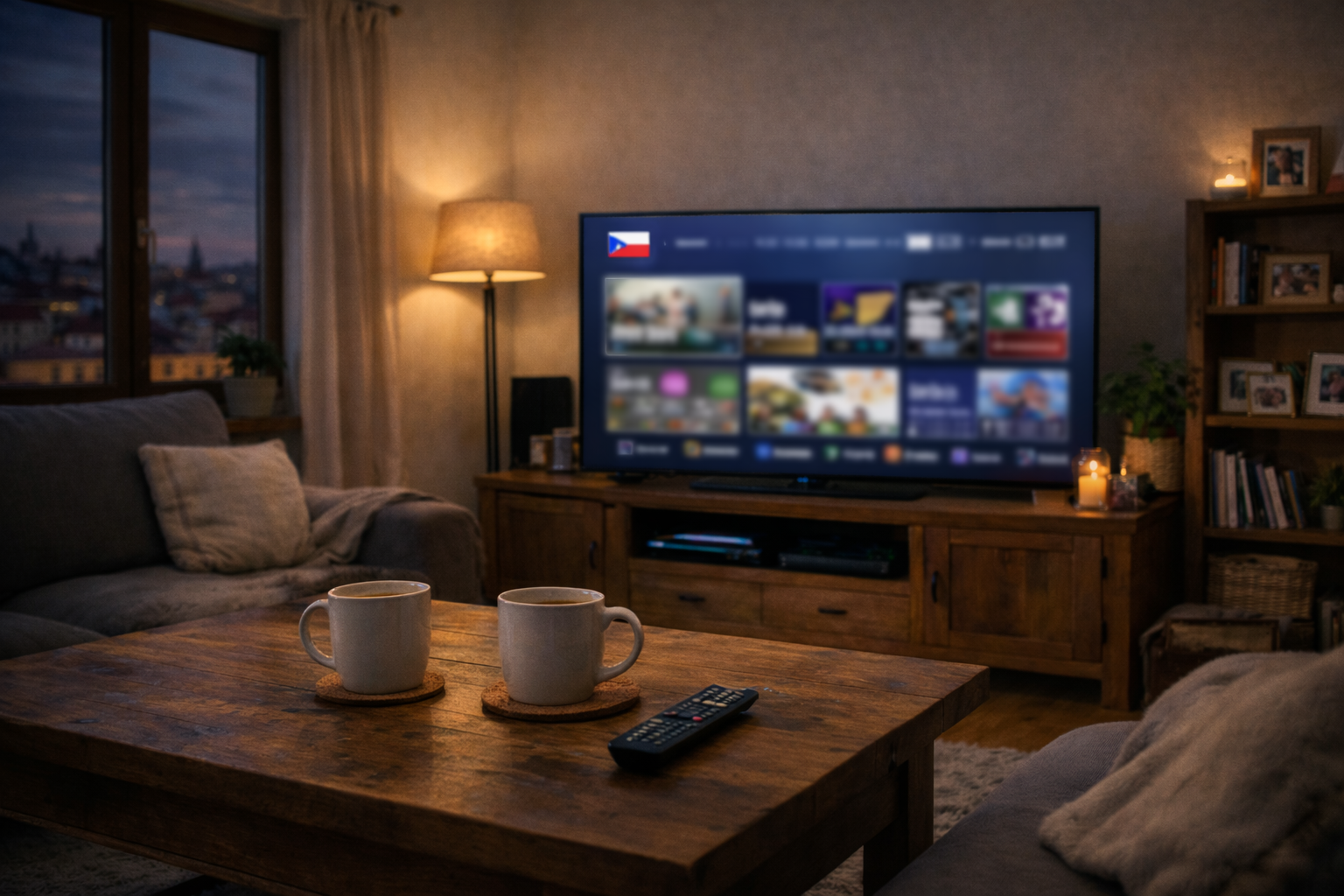
In Czech homes in 2026, family TV viewing is usually less about a perfect choice and more about a shared rhythm. The screen is often on while people eat, talk, tidy up, or take a short break before the next task.
What families watch tends to follow comfort and routine. Many homes keep entertainment running quietly in the background, similar to the behavior described in how background entertainment viewing works in Austrian households in 2026, where the TV supports the atmosphere more than it demands attention.
Quick Context
This article explains what Czech families really watch at home in 2026 by focusing on household routines, shared screen habits, background viewing, and prime time decision fatigue.
- Shared screen reality in family homes
- Background viewing as a household default
- Prime time as a family compromise
- How families decide what to watch
- Decision fatigue and repeating the same channels
- Different viewers, different needs
- Family viewing behavior patterns
- Reality Check
- Final Verdict
- Frequently Asked Questions
Shared screen reality in family homes
Family viewing is shaped by the fact that the living room is shared. Not everyone has the same mood, the same attention level, or the same goal at the same time.
In practice, this pushes households toward content that is easy to follow, familiar, and acceptable to most people. The aim is often to avoid conflict and keep the evening smooth.
Background viewing as a household default
A common pattern is leaving the TV on as background. It fills silence and makes the home feel active, even when nobody is fully watching.
This is especially visible during cooking, homework time, and cleaning. The screen becomes part of the environment rather than the main activity.
Prime time as a family compromise
Prime time still exists in 2026, but it often works as a compromise window. Families settle into longer viewing after dinner, but attention remains split between the screen and the household.
What wins in prime time is usually content that feels safe and predictable. This reduces tension and helps everyone unwind.
How families decide what to watch
Decisions are often made quickly. Families usually cycle through a small set of familiar channels rather than exploring.
The remote control becomes a tool for ending the discussion, not starting it. Once something acceptable appears, the switching stops.
Decision fatigue and repeating the same channels
Decision fatigue is one of the strongest drivers of repeating habits. After a full day, families prefer low effort options that do not require comparison and analysis.
This is why many households return to the same evening choices again and again. The goal is rest, not discovery.
Different viewers, different needs
In one household, different viewers use TV differently. Some want quiet background sound, others want a clear story, and some just want a short escape.
The most common family pattern is choosing content that allows flexible attention. People can watch, multitask, or step away without feeling lost.
Family TV viewing patterns in Czech homes 2026
| Household moment | What tends to play | Why it fits families |
|---|---|---|
| Late afternoon | Light entertainment in the background | Supports chores and short breaks with low attention. |
| Dinner time | Comfort viewing that is easy to follow | Works with conversation and shared space. |
| Prime time | Familiar shows and predictable formats | Reduces decision stress and keeps the evening calm. |
| Late evening | Quiet background programs | Helps families wind down without strong engagement. |
Reality Check
What families watch is often driven by routine and energy levels, not by what is objectively best. In many Czech homes, the TV is a shared comfort tool that supports the household rhythm.
Final Verdict
Final Verdict
Czech family viewing in 2026 is a routine built around shared space and low effort decisions. Familiar channels, background viewing, and prime time compromises shape what actually gets watched at home.
Frequently Asked Questions
| Question | Answer |
|---|---|
| Do Czech families watch TV together every night | Many families share the same space nightly, but attention levels vary and viewing is often flexible. |
| Why do families repeat the same channels | Familiar choices reduce decision fatigue and make evenings feel easier after a long day. |
| Is background TV common in family homes | Yes, it often runs during chores, meals, and downtime to support a comfortable atmosphere. |
| What happens during prime time in 2026 | Prime time still exists, but it often becomes a household compromise focused on predictable viewing. |