Why Eutelsat 16E Sports Feeds Suddenly Disappear

Estimated reading time: 18 minutes.
- How sports feeds differ from regular channels.
- Why temporary feeds disappear.
- Feed scheduling and transmission windows.
- Contribution feeds vs broadcast channels.
- Signal quality requirements.
- Receiver lock behavior on feeds.
- Why some feeds appear only briefly.
- How to troubleshoot disappearing feeds.
- What Sports Feeds Actually Are
- Why Most Sports Feeds Are Temporary
- Feed Scheduling And Event Windows
- Contribution Links vs TV Channels
- Signal Quality Requirements For Feeds
- Receiver Lock And Feed Instability
- Transponder Reallocation During Events
- Why Feeds Sometimes Vanish Instantly
- Technical Comparison Table
- Troubleshooting Disappearing Sports Feeds
- Reality Check
- Final Verdict
- FAQ
What Sports Feeds Actually Are
Sports feeds are not always intended as permanent television services.
Many are contribution feeds used by broadcasters to transport live video from stadiums, production facilities, or remote broadcast locations.
These signals often exist only for operational purposes.
Unlike traditional channels that broadcast continuously twenty-four hours per day, feeds are activated only when needed.
Once the event is completed, the transmission may be removed entirely.
This is the first reason many viewers believe feeds disappear randomly.
The feed has not failed.
Its job is simply finished.
Why Most Sports Feeds Are Temporary
Satellite bandwidth is valuable.
Broadcasters rarely keep temporary event feeds active when they are not being used.
Instead, transponder capacity is allocated only during the necessary broadcast period.
A football match may require transmission several hours before kickoff.
After post-match coverage ends, the feed may disappear immediately.
This behavior often surprises viewers because it creates the impression of unstable reception.
In reality, the transmission schedule itself is changing.
Feed Scheduling And Event Windows
Sports feeds often operate according to strict production schedules.
The feed may activate during stadium preparation.
Additional feeds may appear for commentary positions.
Some links are active only during testing periods.
Others become active only during live transmission windows.
Once production teams complete their work, the feeds are removed.
Because viewers rarely see the broadcaster’s schedule, the disappearance appears random even though it follows a planned workflow.
Contribution Links vs TV Channels
A normal television channel is designed for public distribution.
Contribution feeds serve a completely different purpose.
Their goal is to transport content between production locations and broadcast centers.
The audience is usually another broadcaster, production facility, or distribution hub.
This means reliability requirements differ.
Feed parameters may change.
Transponder assignments may change.
Transmission duration may change.
All of these factors contribute to the perception that sports feeds disappear unexpectedly.
Signal Quality Requirements For Feeds
Many sports feeds use advanced transmission settings to maximize efficiency.
Some operate using demanding DVB-S2 configurations.
Others use higher symbol rates or aggressive modulation settings.
These configurations may require cleaner signal quality than standard channels.
A feed can therefore disappear from reception before ordinary channels show any problems.
The feed itself may still be active.
The receiving installation may simply no longer provide sufficient signal quality for stable decoding.
Receiver Lock And Feed Instability
Receivers often behave differently with temporary feeds.
Some feeds use unusual parameters.
Others switch transmission settings during production workflows.
A receiver that locked successfully earlier may temporarily lose synchronization if the feed configuration changes.
This can create the appearance of a disappearing signal even when transmission continues.
The problem is sometimes related to decoding conditions rather than actual signal loss.
Transponder Reallocation During Events
Broadcasters regularly reassign transponder resources.
A feed used for one sporting event may later be replaced by another transmission.
Bandwidth allocation changes throughout the broadcast day.
Some transponders become active only during major events.
Others carry multiple temporary services.
When resources are reassigned, feeds can disappear immediately.
This behavior is normal and reflects operational broadcast management rather than technical failure.
Why Feeds Sometimes Vanish Instantly
A sports feed can disappear within seconds because the uplink operator ends the transmission.
Unlike a television channel that remains on air continuously, a feed often exists only for a specific task.
Once the transmission session ends, the carrier may be removed instantly.
Receivers lose lock immediately because the signal no longer exists.
This type of disappearance is fundamentally different from weather-related signal loss or alignment problems.
The feed has been intentionally switched off.
Technical Comparison Table
| Characteristic | Sports Feed | Regular TV Channel |
|---|---|---|
| Operating schedule | Temporary | Continuous |
| Main purpose | Contribution and event coverage | Public broadcasting |
| Transmission duration | Event dependent | Long term |
| Parameter changes | More frequent | Less frequent |
| Disappearance probability | High | Low |
| Receiver lock behavior | Can vary significantly | Usually stable |
Troubleshooting Disappearing Sports Feeds
Before assuming a feed has vanished because of equipment failure, verify that regular channels on the same satellite remain stable.
Check signal quality rather than signal strength alone.
Monitor whether other frequencies continue working normally.
If permanent channels remain stable, the feed may simply have reached the end of its transmission schedule.
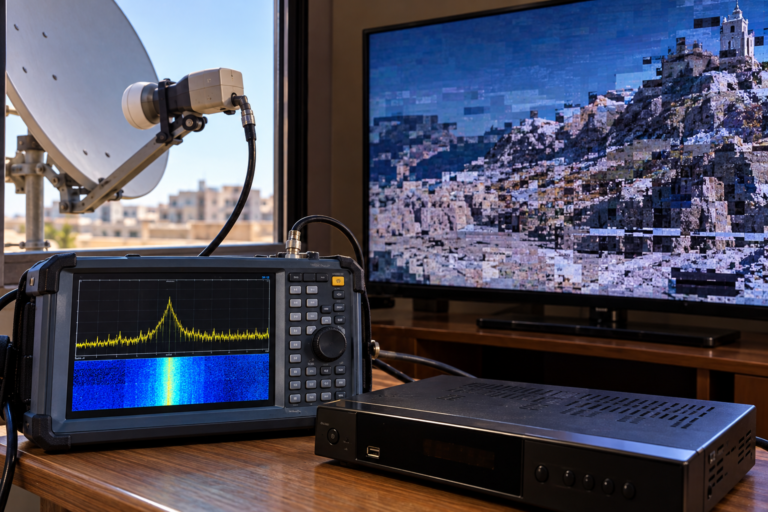
Inspect alignment, LNB condition, and BER stability if multiple feeds disappear unexpectedly.
Signal margin issues often affect demanding feeds before ordinary channels.
For additional information about how weak hardware can affect demanding transmissions, read Why Cheap LNBs Destroy Eutelsat 16E HD Reception.
Most disappearing sports feeds are not actually failing. They are often temporary transmissions designed for specific events. When the broadcast task ends, the feed is removed. This behavior is normal and should not automatically be interpreted as a reception problem.
Eutelsat 16E sports feeds disappear because they are often temporary operational transmissions rather than permanent television channels. Feed schedules, contribution workflows, transponder reallocation, and event-based broadcasting all contribute to their short lifespan. Understanding this distinction helps separate normal broadcast operations from genuine reception issues.
FAQ
| Question | Answer |
|---|---|
| Why do sports feeds disappear after an event? | Because many feeds are temporary transmissions created only for specific broadcast tasks. |
| Are sports feeds regular TV channels? | No. Many are contribution links used by broadcasters and production teams. |
| Can a feed disappear even when my dish works correctly? | Yes. The transmission may simply have ended. |
| Why do some feeds require stronger signal quality? | They often use demanding DVB-S2 settings and advanced modulation methods. |
| Can receiver settings affect feed reception? | Yes. Some feeds use parameters that require accurate synchronization. |
| How can I tell whether the feed ended or my signal failed? | Check whether other channels on the satellite remain stable. If they do, the feed may have been intentionally removed. |