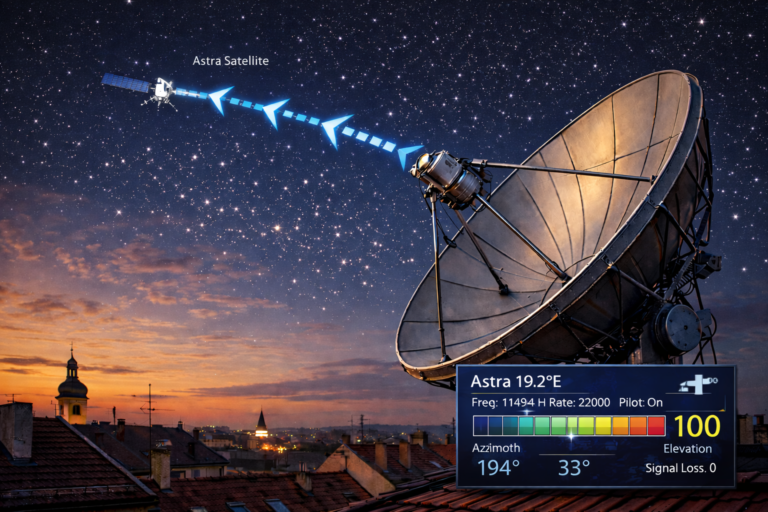
The Strange Reason 16E Channels Look Better After Rain Stops
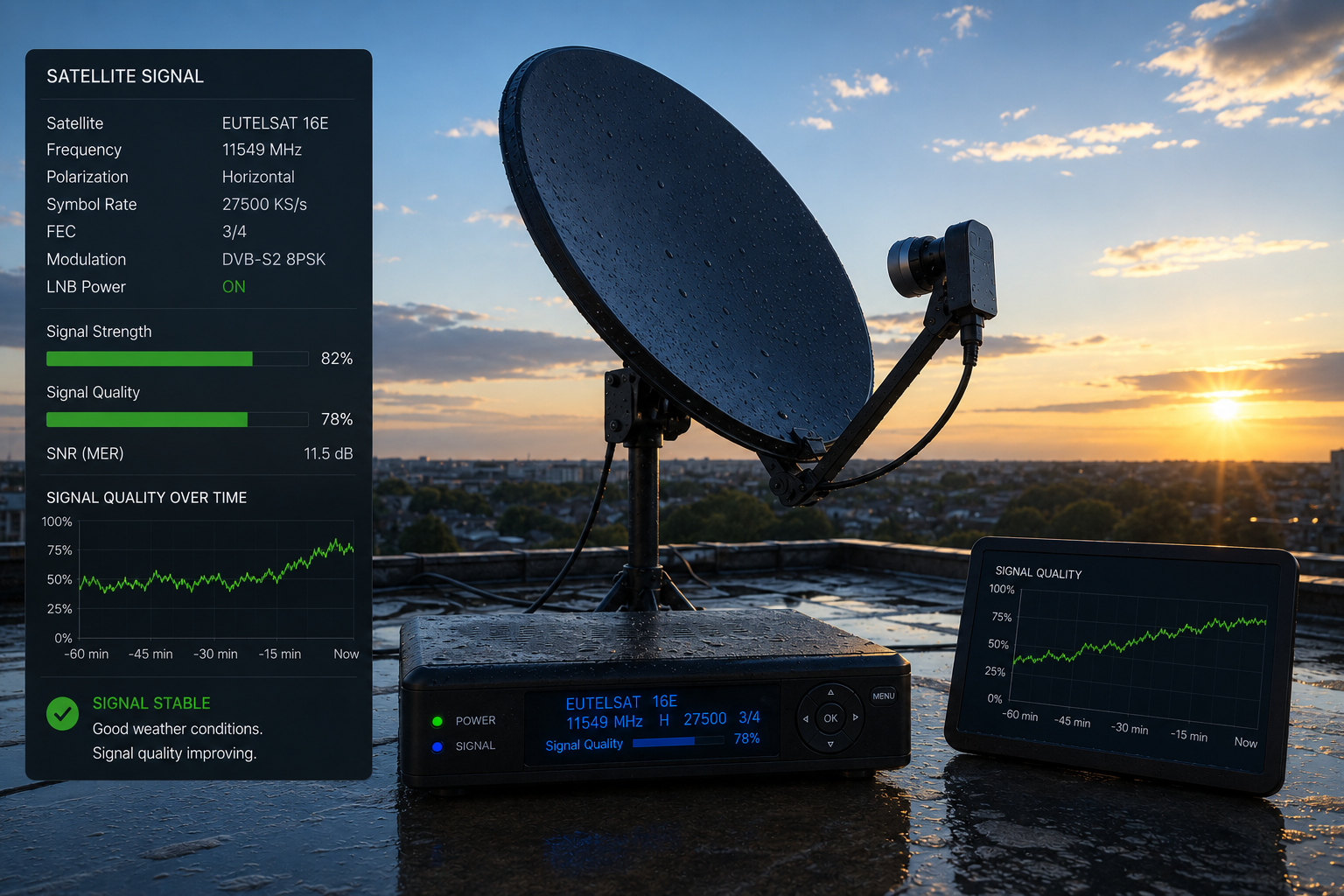
Estimated reading time: 18 minutes.
- What rain fade really is.
- Why channels degrade during storms.
- Signal margin recovery after rain.
- Atmospheric attenuation effects.
- Receiver synchronization behavior.
- LNB performance after weather events.
- Why HD channels recover first.
- The difference between perception and reality.
- What Rain Fade Actually Does
- Signal Margin Returns After Rain
- The Atmosphere Becomes Cleaner Again
- Receiver Synchronization Improves
- Why Channels Seem Better Than Before
- Why HD Channels Show The Biggest Difference
- The Role Of The LNB During Weather Changes
- Weak Installations Show Stronger Recovery Effects
- Technical Comparison Table
- How To Improve Post-Rain Stability
- Reality Check
- Final Verdict
- FAQ
What Rain Fade Actually Does
Satellite signals travel through the atmosphere before reaching your dish.
Heavy rain absorbs and scatters part of that signal.
Engineers refer to this phenomenon as rain fade.
As attenuation increases, signal quality drops and BER rises.
Once the decoding threshold is crossed, channels begin freezing or disappear completely.
The important detail is that the satellite transmission remains unchanged.
The interference exists within the signal path between the satellite and the receiving dish.
Signal Margin Returns After Rain
Signal margin is the reserve above the minimum decoding threshold.
Rain consumes part of this reserve.
When the rain ends, that lost margin immediately returns.
Channels that were operating close to failure suddenly gain additional stability.
The receiver has more room to handle errors.
Synchronization becomes easier.
Video playback becomes smoother.
This recovery often creates the impression that reception has improved beyond normal levels.
The Atmosphere Becomes Cleaner Again
During a storm, moisture density within the signal path increases significantly.
Water droplets absorb microwave energy and reduce effective signal power.
As the rain stops, the atmosphere gradually returns to more favorable transmission conditions.
Signal attenuation falls rapidly.
Noise decreases.
The signal reaching the dish becomes cleaner and easier to decode.
Receiver Synchronization Improves
Digital receivers constantly synchronize themselves with incoming transport streams.
During heavy rain, synchronization may repeatedly fail and recover.
After rain fade disappears, the receiver locks more efficiently.
Error correction systems no longer work as hard.
Buffer recovery becomes faster.
The overall viewing experience appears dramatically improved even though the receiver is simply operating under better conditions.
Why Channels Seem Better Than Before
Human perception plays a surprisingly important role.
After experiencing severe pixelation or complete signal loss, normal reception feels exceptionally good.
Viewers compare current performance against the storm conditions they just experienced.
As a result, channels appear sharper, more stable, and more responsive.
In many cases reception has simply returned to its normal baseline.
The contrast makes the improvement feel larger than it actually is.
Why HD Channels Show The Biggest Difference
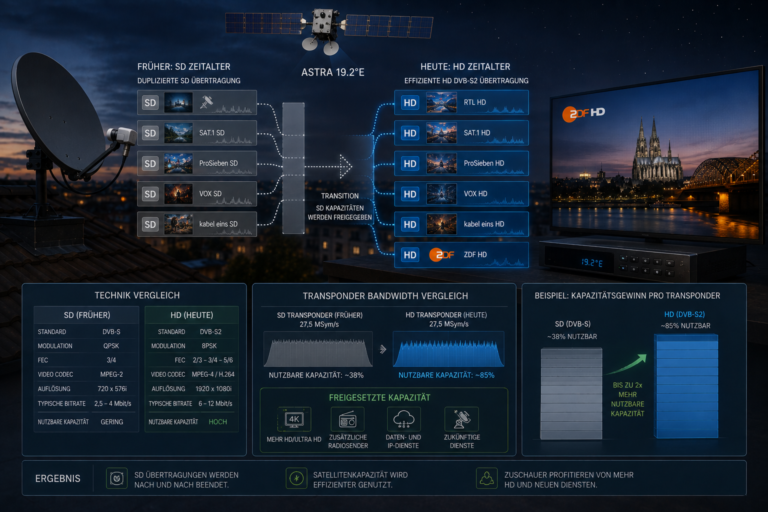
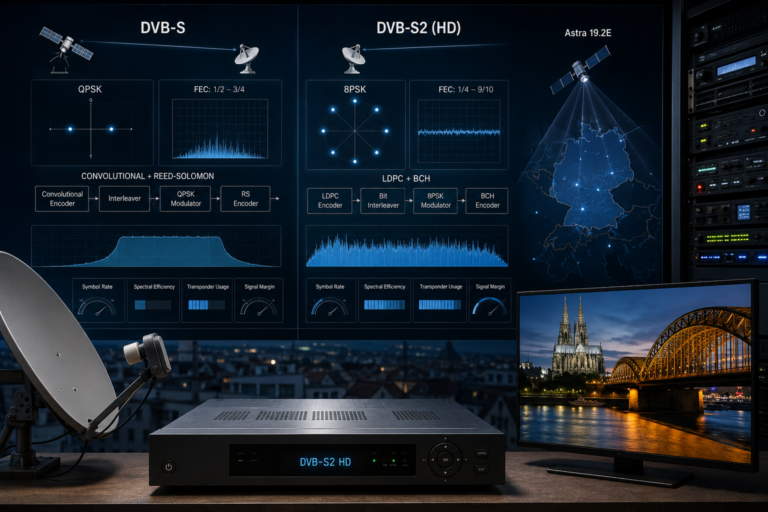
HD channels using DVB-S2 technology require cleaner decoding conditions than older DVB-S services.
During rain fade they are often the first channels to freeze.
Once the rain stops and signal margin returns, they are also the channels that show the most dramatic recovery.
The viewer immediately notices the difference because HD content is more sensitive to quality fluctuations.
The Role Of The LNB During Weather Changes
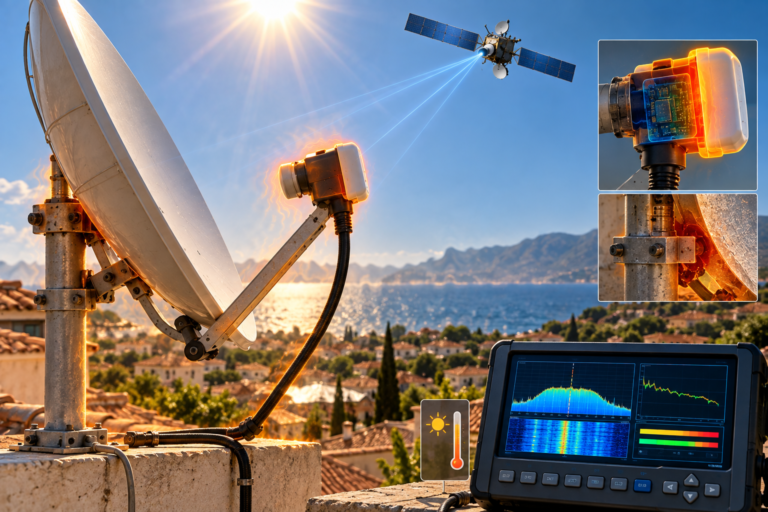
The LNB continuously converts satellite frequencies into signals the receiver can process.
When atmospheric conditions improve, the LNB receives a cleaner signal to work with.
This reduces the impact of noise and makes frequency recovery easier.
High-quality LNBs often recover more quickly from difficult weather conditions because their oscillators remain more stable.
Weak Installations Show Stronger Recovery Effects
Systems with limited signal margin often display the most dramatic changes after rain.
A weak installation may spend much of a storm operating close to failure.
As soon as attenuation disappears, reception improves noticeably.
Strong installations behave differently.
They maintain enough reserve to survive most weather conditions without major interruptions.
As a result, the post-rain improvement appears less dramatic.
Technical Comparison Table
| Condition | During Rain | After Rain Stops |
|---|---|---|
| Signal margin | Reduced | Restored |
| Atmospheric attenuation | High | Low |
| BER | Elevated | Lower |
| Receiver synchronization | More difficult | Stable |
| HD channel stability | Often affected | Improved |
| Viewer experience | Freezing and pixelation | Smooth playback |
How To Improve Post-Rain Stability
The best solution is maximizing signal margin before bad weather arrives.
Fine-tune dish alignment carefully.
Verify LNB skew settings.
Inspect connectors for moisture ingress.
Replace aging cables if necessary.
A stronger baseline installation suffers less during rain and recovers more quickly afterward.
For a deeper understanding of channel freezing behavior, read Why Eutelsat 16E Channels Freeze Even With Strong Signal.
Rain does not actually improve Eutelsat 16E reception. What viewers experience is the rapid recovery of signal margin and decoding stability once atmospheric attenuation disappears. The satellite continues operating normally throughout the event.
The strange reason Eutelsat 16E channels look better after rain stops is that rain fade temporarily reduces signal margin and increases decoding difficulty. Once the rain ends, attenuation drops, BER improves, synchronization stabilizes, and the receiver regains its full decoding reserve. The result is a reception system that feels dramatically better even though it has simply returned to normal operating conditions.
FAQ
| Question | Answer |
|---|---|
| Does rain improve satellite reception after it stops? | No. Reception returns to normal after atmospheric attenuation disappears. |
| What is rain fade? | Rain fade is signal loss caused by water droplets absorbing and scattering microwave signals. |
| Why do HD channels show bigger changes? | DVB-S2 HD channels are more sensitive to signal quality fluctuations. |
| Can rain permanently damage reception? | No. Normal rain fade is temporary unless water enters connectors or equipment. |
| Why does the picture seem sharper after rain? | The contrast between poor storm reception and restored reception makes the improvement feel larger. |
| How can I reduce rain-related problems? | Increase signal margin through better alignment, stable LNB positioning, and proper cable maintenance. |