Why Cheap LNBs Destroy Eutelsat 16E HD Reception
Estimated reading time: 18 minutes.
- Why cheap LNBs affect HD channels first.
- How LNB noise reduces signal quality.
- Why frequency drift causes DVB-S2 instability.
- Signal strength vs signal quality.
- How heat changes LNB behavior.
- Why some 16E frequencies fail before others.
- Receiver lock problems caused by weak LNB output.
- Real fixes for stable Eutelsat 16E HD reception.
- What The LNB Actually Does
- Why Cheap LNBs Create Hidden Problems
- Signal Strength vs Signal Quality
- Noise Figure And HD Reception
- Frequency Drift And DVB-S2 Lock Problems
- Heat, Sunlight, And Daily Instability
- LNB Skew And Polarization Accuracy
- How The Receiver Reacts To Poor LNB Output
- Technical Comparison Table
- How To Fix LNB Related HD Problems
- Reality Check
- Final Verdict
- FAQ
What The LNB Actually Does
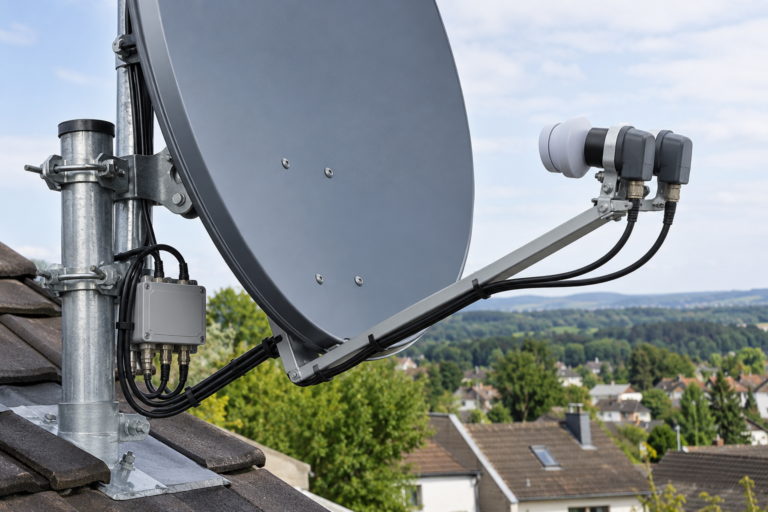
The LNB is not just a small plastic part attached to the dish.
It is one of the most important components in the entire satellite reception chain.
The dish collects weak microwave signals from Eutelsat 16E and reflects them toward the LNB feedhorn.
The LNB receives those signals, amplifies them, and converts them into lower frequencies that the receiver can process.
If the LNB performs poorly, the receiver never receives a clean version of the signal.
This means the problem begins before the receiver has any chance to correct it.
A cheap LNB may still produce enough signal for the receiver to show strength, but that does not mean the signal is clean enough for stable HD decoding.
Why Cheap LNBs Create Hidden Problems
Cheap LNBs often fail in a quiet and confusing way.
They do not always stop working completely.
Instead, they may continue detecting the satellite while adding noise, instability, or frequency errors to the signal.
This creates symptoms that look like dish alignment problems, weak transponders, rain fade, or receiver failure.
The user may see strong signal readings but unstable quality.
HD channels may freeze while other channels continue working.
Some frequencies may lock normally while others disappear randomly.
This is why cheap LNB problems are often misdiagnosed.
Signal Strength vs Signal Quality
A receiver signal meter can be misleading.
Signal strength measures RF energy reaching the tuner.
Signal quality measures how clean and decodable that signal actually is.
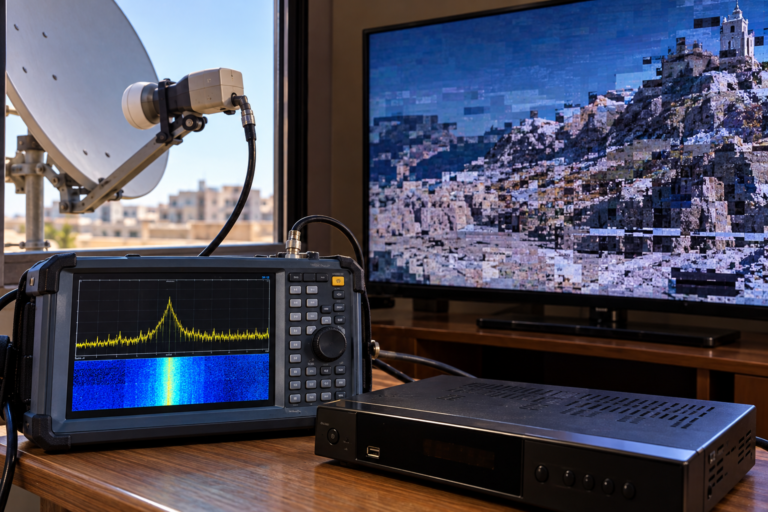
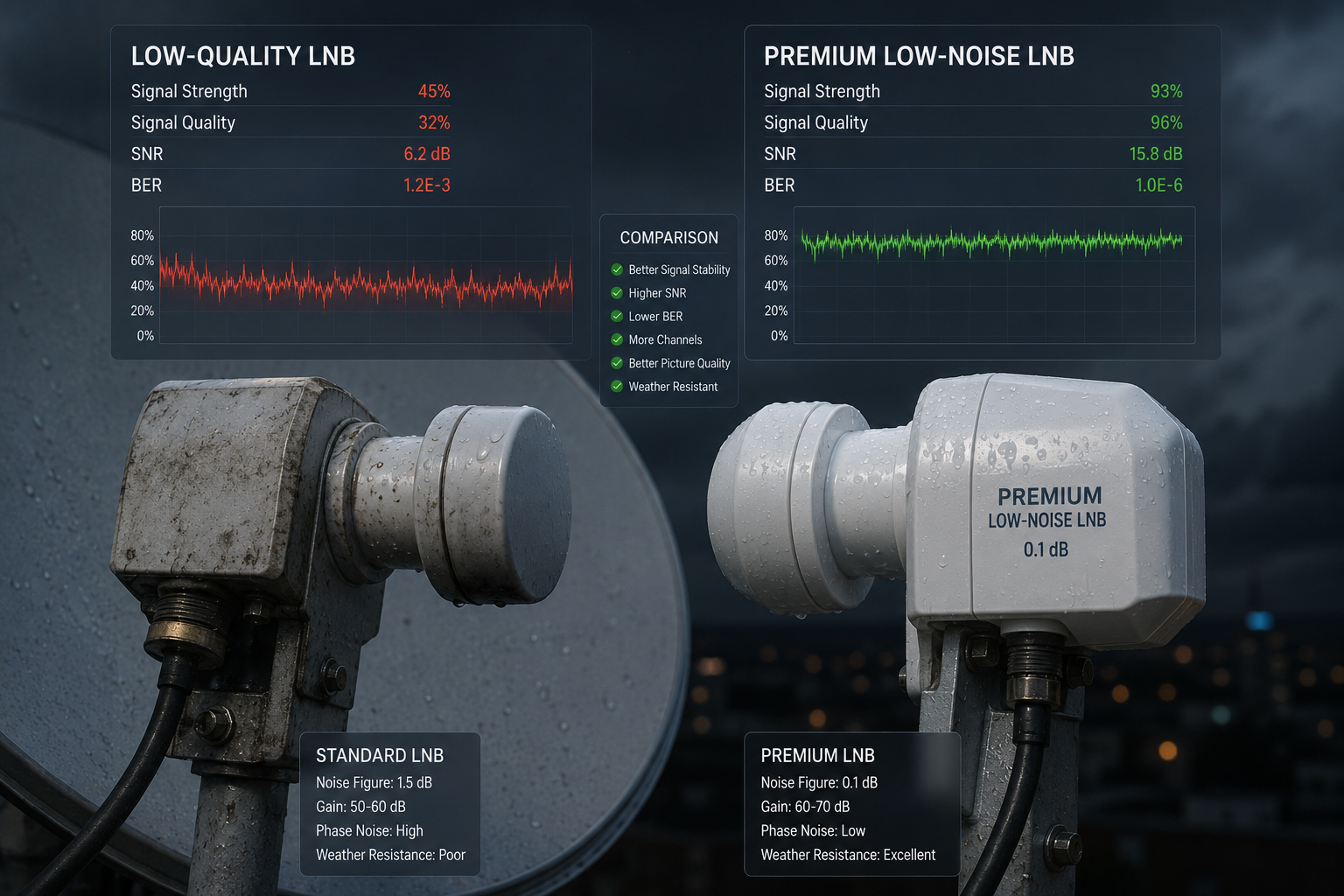
A poor LNB can deliver high strength but low quality.
This happens because the receiver still detects energy from the satellite, but the useful digital information inside that signal has become unstable.
HD channels depend on clean signal quality much more than raw strength.
If BER begins rising, the receiver must work harder to rebuild the transport stream.
Once errors become too frequent, the HD image breaks into blocks or disappears completely.
Noise Figure And HD Reception
Every LNB adds some noise while amplifying the incoming satellite signal.
Higher quality LNBs are designed to keep this added noise as low as possible.
Cheap LNBs often perform worse in real conditions than their printed specifications suggest.
Noise reduces the difference between the useful signal and background interference.
This directly damages signal quality.
On strong transponders, the problem may remain hidden.
On sensitive Eutelsat 16E HD transponders, the same noise can push reception close to the decoding threshold.
The result is unstable HD reception even when the dish size and receiver seem acceptable.
Frequency Drift And DVB-S2 Lock Problems
Frequency stability is one of the most important differences between weak and reliable LNBs.
Inside the LNB, an oscillator helps convert satellite frequencies into a range the receiver can use.
If this oscillator drifts, the receiver must compensate.
Modern DVB-S2 HD channels are less forgiving because they require accurate synchronization.
A small amount of drift can increase BER.
A larger drift can make the receiver lose lock completely.
This explains why some users can find Eutelsat 16E but cannot lock certain HD channels properly.
The signal is present, but the converted frequency is not stable enough for reliable decoding.
Heat, Sunlight, And Daily Instability
Cheap LNBs are often more sensitive to heat.
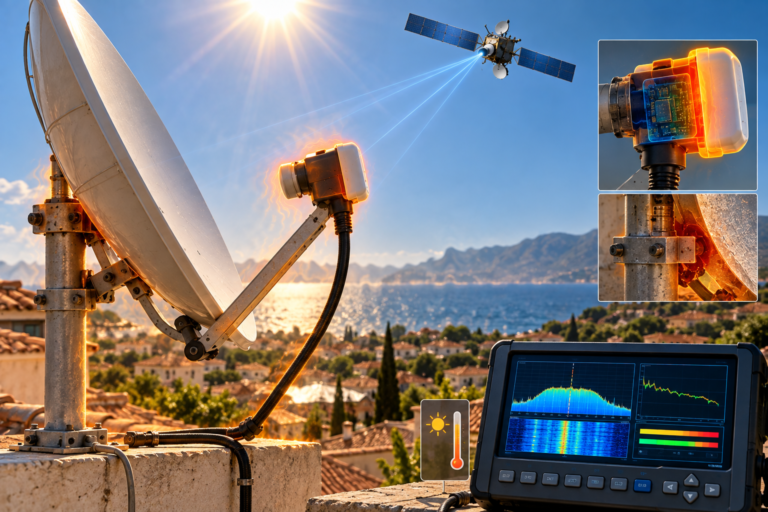
During the day, the LNB absorbs sunlight and rooftop heat.
As temperature rises, oscillator stability may change.
Plastic housing, internal electronics, and connector areas can all respond to heat differently.
This is why some Eutelsat 16E HD problems appear at certain hours of the day.
The LNB may work acceptably in the morning, become unstable in the evening, then recover later when temperature drops.
The user sees this as a strange satellite problem.
In reality, the local hardware is changing with temperature.
LNB Skew And Polarization Accuracy
LNB skew controls how accurately the LNB aligns with the satellite polarization angle.
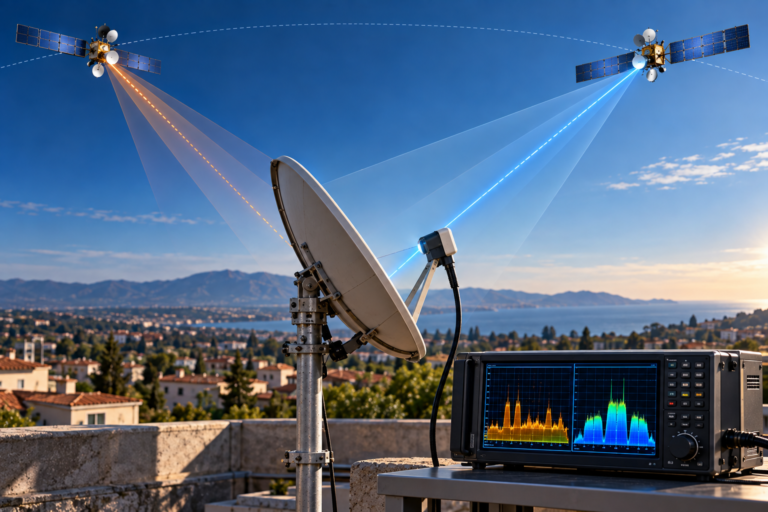
Eutelsat 16E uses different polarization planes to separate transponders.
If skew is wrong, horizontal and vertical signals can interfere with each other.
A good LNB with accurate positioning can preserve better polarization separation.
A cheap LNB with weak mechanical design may make fine skew adjustment harder.
Even small skew errors can affect sensitive HD frequencies.
This is why some 16E channels may remain stable while others become unreliable.
The problem is not always dish direction. Sometimes the LNB angle is the real weak point.
How The Receiver Reacts To Poor LNB Output
Receivers depend on the quality of the signal coming from the LNB.
When LNB output is noisy or unstable, the receiver has to correct more errors.
At first, the channel may still open.
Then freezing begins.
Next, the screen may turn into blocks.
Finally, the receiver may lose lock completely.
Different receivers handle poor LNB output differently.
Some tuners tolerate instability better.
Others fail quickly.
However, replacing the receiver will not fully solve the issue if the LNB is sending unstable signal from the start.
Technical Comparison Table
| Factor | Good Quality LNB | Cheap Or Weak LNB |
|---|---|---|
| Noise performance | Lower added noise | Higher noise under real conditions |
| Frequency stability | More accurate oscillator behavior | Drift during heat or aging |
| HD channel stability | Cleaner DVB-S2 lock | Freezing and pixelation more likely |
| Skew adjustment | More accurate positioning | Less precise mechanical behavior |
| Weather tolerance | Better signal margin | Rain and humidity expose weaknesses faster |
| Receiver behavior | Stable lock and lower BER | Higher BER and sudden lock loss |
How To Fix LNB Related HD Problems
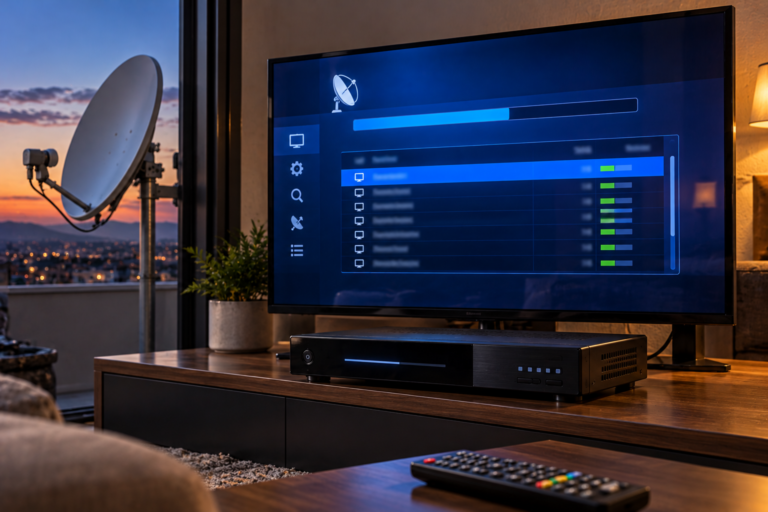
Start by checking signal quality rather than strength.
If strength looks high but HD channels freeze, the LNB should be considered as a possible cause.
Test several Eutelsat 16E transponders, especially sensitive HD frequencies.
If some frequencies behave much worse than others, the issue may involve LNB drift, skew, or weak noise performance.
Inspect outdoor connectors carefully.
A good LNB will still perform badly if water enters the connector.
Check the cable path for moisture, cracks, and poor shielding.
Replace old or suspicious LNB units with stable low-noise models.
After replacement, fine-tune dish alignment and LNB skew again.
Do not assume the same angle is perfect for the new unit.
For more explanation about how poor signal quality creates visible screen blocks, read Why Eutelsat 16E Channels Suddenly Turn Into Blocks.
A cheap LNB does not always fail by losing the satellite completely. More often, it damages the signal quietly through noise, drift, weak polarization separation, or unstable output. That is why HD channels may freeze or disappear while the receiver still shows signal. The signal is present, but it is not clean enough for reliable decoding.
Cheap LNBs can destroy Eutelsat 16E HD reception because HD channels require clean signal quality, accurate frequency conversion, and stable synchronization. A weak LNB may still detect the satellite, but it can increase BER, reduce signal margin, and make DVB-S2 transponders unstable. The best solution is not repeated scanning or receiver replacement. It is proper alignment, healthy cabling, correct skew, and a stable LNB that can preserve signal quality before the receiver starts decoding.
FAQ
| Question | Answer |
|---|---|
| Can a cheap LNB affect only HD channels? | Yes. HD DVB-S2 channels need cleaner signal quality and are usually affected first. |
| Why does my receiver still show signal? | Because signal strength may still exist even when signal quality is unstable. |
| Can LNB drift cause channel freezing? | Yes. Frequency drift can increase BER and make the receiver lose stable lock. |
| Does LNB skew matter on Eutelsat 16E? | Yes. Incorrect skew can reduce polarization separation and weaken sensitive frequencies. |
| Should I replace the receiver first? | Usually not. Check alignment, LNB condition, cable quality, and connectors first. |
| What is the best fix for HD instability? | Use a stable low-noise LNB, optimize skew, fine-tune dish alignment, and inspect cabling. |