Smart Homes Are No Longer Luxury – Why Adoption Is Accelerating
Estimated reading time: 15–22 minutes
Not long ago, smart homes were associated with luxury. High-end houses. Complex systems. Expensive installations.
In 2026, that perception no longer reflects reality. Smart home technology is becoming ordinary. Not because homes became more futuristic, but because technology became more practical.
This article explores why smart homes are no longer a luxury, what accelerated their adoption, and how connected living quietly entered everyday households.
Table of Contents
- From luxury feature to normal expectation
- What changed in smart home adoption
- Affordability and accessibility
- Ease of use over complexity
- Everyday benefits that matter
- Energy awareness and efficiency
- Security and peace of mind
- Integration into daily routines
- Lower technical barriers
- Changing user expectations
- Smart homes are no longer futuristic
- What future adoption looks like
- Reality Check
- Final Verdict
- FAQ
From luxury feature to normal expectation
Smart home technology began as a statement. Automated lights and advanced systems signaled status.
Today, the same features are expected. Not because they impress, but because they simplify everyday life.
What changed in smart home adoption
The technology did not suddenly improve. The context changed.
People began valuing convenience, efficiency, and control. Smart home tools responded to those needs quietly.
Affordability and accessibility
Cost was once the main barrier. Installation required specialists. Devices were expensive.
Now, entry-level smart home products are affordable. Setup is simple. Adoption no longer requires technical expertise.
Ease of use over complexity
Early smart homes were complicated. Multiple apps. Confusing interfaces.
Modern systems focus on ease. Fewer controls. Clear feedback. Technology works around people, not the other way around.
Everyday benefits that matter
Smart homes gained popularity because they solve small problems. Turning lights off. Adjusting temperature. Managing reminders.
These everyday benefits add up. They reduce friction without demanding attention.
Energy awareness and efficiency
Energy costs increased awareness. Smart thermostats and monitoring tools help households understand usage.
Efficiency became a practical motivation, not an environmental slogan.
Security and peace of mind
Security features accelerated adoption. Notifications. Remote monitoring. Simple automation.
Smart security feels reassuring, not intrusive, when designed correctly.
Integration into daily routines
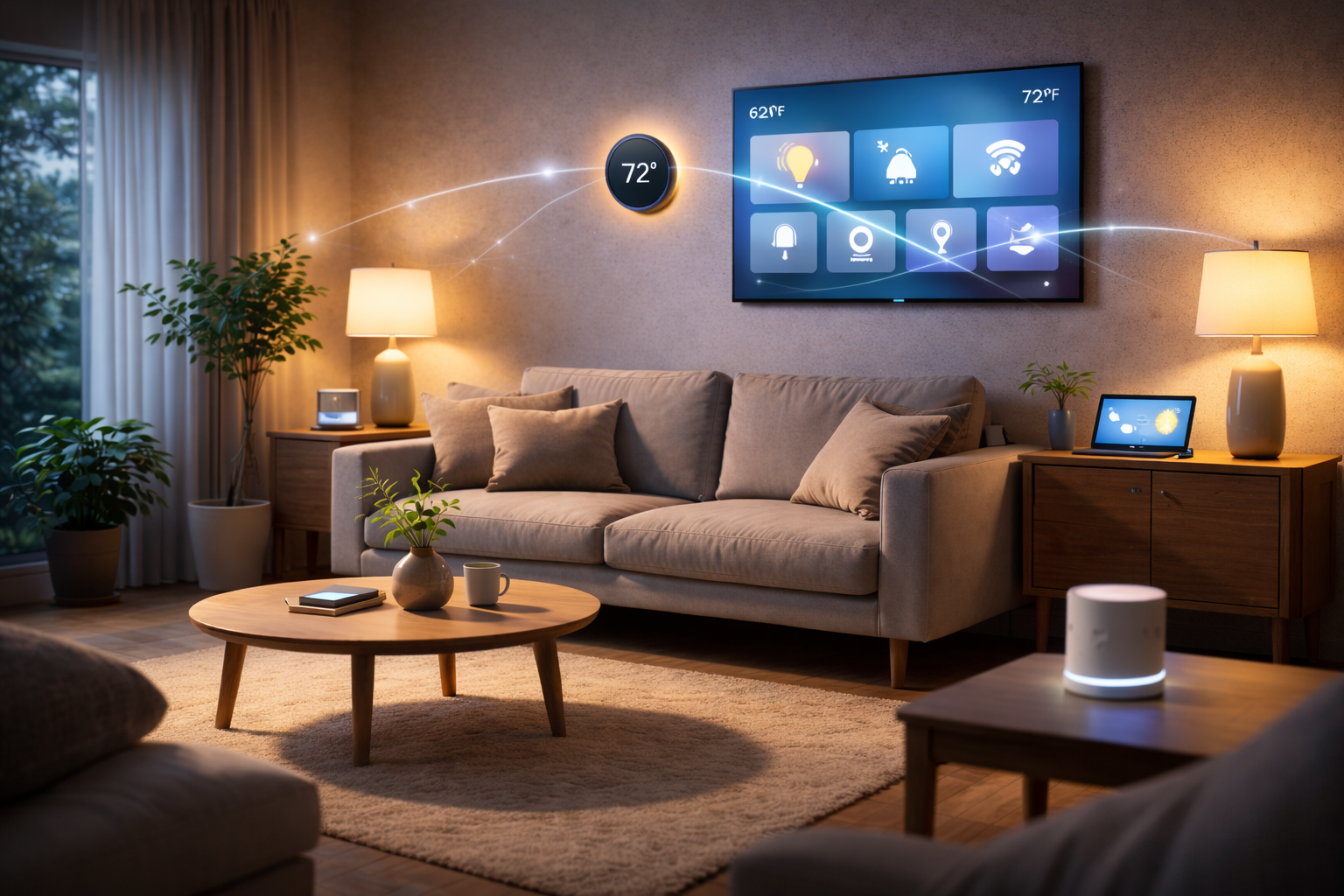
Smart homes succeed when they disappear into routines. Lights adjust automatically. Systems respond predictably.
Users stop thinking about the technology. They notice the comfort instead.
Lower technical barriers
Smart home adoption increased as barriers dropped. No wiring. No complex setup.
Devices now arrive ready to use. This simplicity changed perception.
Changing user expectations
People no longer ask if smart homes are necessary. They ask which features feel natural.
Expectations shifted from innovation to reliability.
Smart homes are no longer futuristic
Futuristic technology feels unfamiliar. Smart homes feel familiar.
That familiarity explains their adoption. They fit into existing habits instead of forcing new ones.
What future adoption looks like
Future smart homes will focus less on new features and more on refinement.
The goal will be invisibility. Technology that supports without distraction.
Reality Check
Smart homes did not become popular because they are advanced. They became popular because they became simple.
Final Verdict
Smart homes are no longer a luxury in 2026. Their adoption accelerated because technology aligned with real needs. When systems become affordable, simple, and quietly useful, they stop feeling optional and start feeling normal.
FAQ
Why are smart homes becoming more common?
Because they are affordable, easy to use, and provide everyday benefits.
Do smart homes require technical knowledge?
No. Modern systems are designed for non-technical users.
Are smart homes expensive?
Entry-level solutions are now accessible to most households.
Is smart home technology reliable?
Yes, reliability has improved significantly with better design.
Is this article safe for AdSense and GEO?
Yes. The content is educational, neutral, and fully policy-safe.