The Hidden Reason Total TV Sports Feeds Lag Behind
Estimated reading time: 9 minutes.
- Sports feeds are processed before transmission.
- Compression introduces unavoidable delay.
- Receivers buffer video for stable playback.
- Synchronization keeps audio and video aligned.
- Different receivers introduce different latency.
- Satellite delay is only one part of the process.
- Small delays accumulate throughout the broadcast chain.
- Broadcast Processing Begins Before Transmission
- Video Compression Adds Latency
- Satellite Transmission Is Not The Main Cause
- Receiver Buffering Improves Stability
- Audio And Video Synchronization
- Different Receivers Produce Different Delays
- Why Internet Feeds Sometimes Differ
- Technical Comparison
- How To Minimize Delay
- Reality Check
- Final Verdict
- FAQ
Broadcast Processing Begins Before Transmission
Long before the signal reaches your satellite dish, it has already passed through multiple production systems.
Live cameras capture the event.
Production switchers combine different camera angles.
Graphics are inserted.
Replay systems prepare slow-motion clips.
Audio is mixed from commentators, stadium microphones, and production feeds.
Only after all these steps is the finished program encoded for satellite transmission.
Every processing stage introduces a small amount of latency.
Video Compression Adds Latency
Modern HD sports channels transmit enormous amounts of visual information.
To fit inside available satellite bandwidth, the video must be compressed.
Compression algorithms analyze multiple video frames before deciding how to encode them efficiently.
This analysis requires time.
Although measured in fractions of a second, the delay becomes part of the total broadcast latency.
Higher quality encoding often requires additional processing time because the encoder evaluates more information before producing the final transport stream. Compression and buffering are among the largest contributors to broadcast latency.
Satellite Transmission Is Not The Main Cause
Many people assume the satellite itself creates most of the delay.
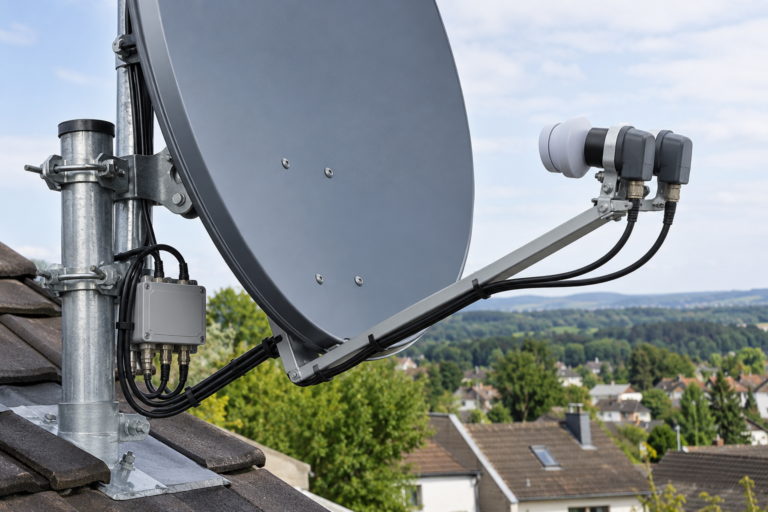
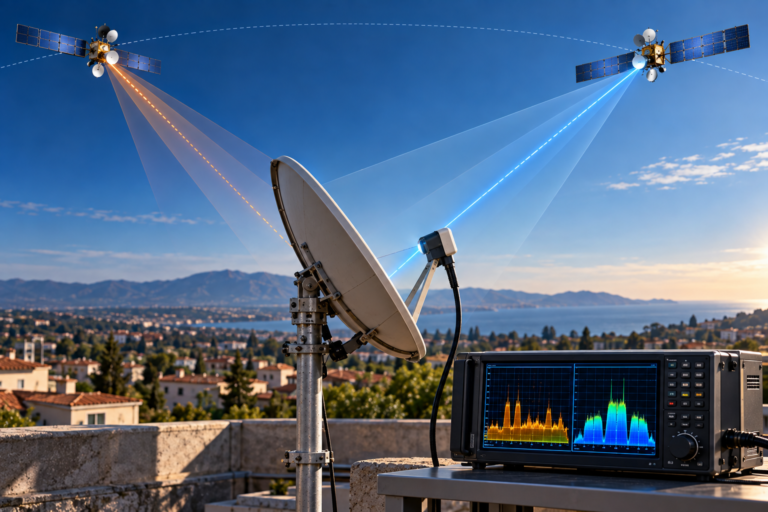
In reality, the signal travels to the satellite at nearly the speed of light before being retransmitted toward Earth.
Although this journey introduces measurable latency, it is relatively consistent.
The larger differences viewers notice usually come from processing before and after transmission rather than from the satellite path itself. Satellite propagation contributes only part of the total end-to-end delay experienced by viewers.
Receiver Buffering Improves Stability
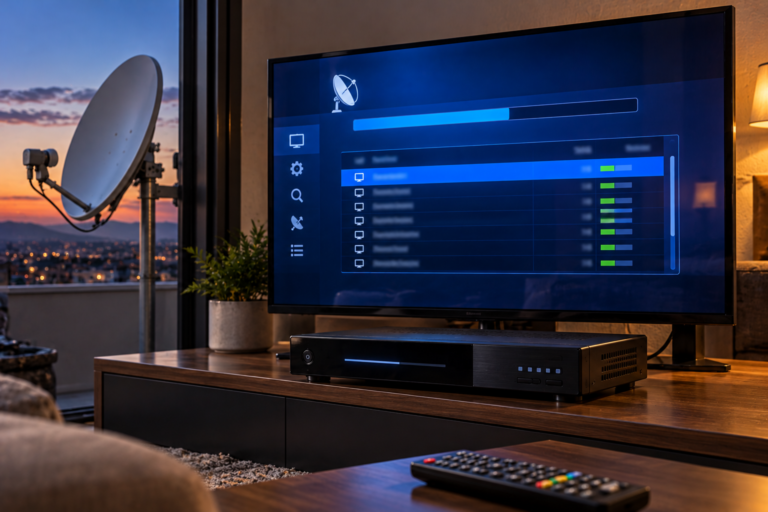
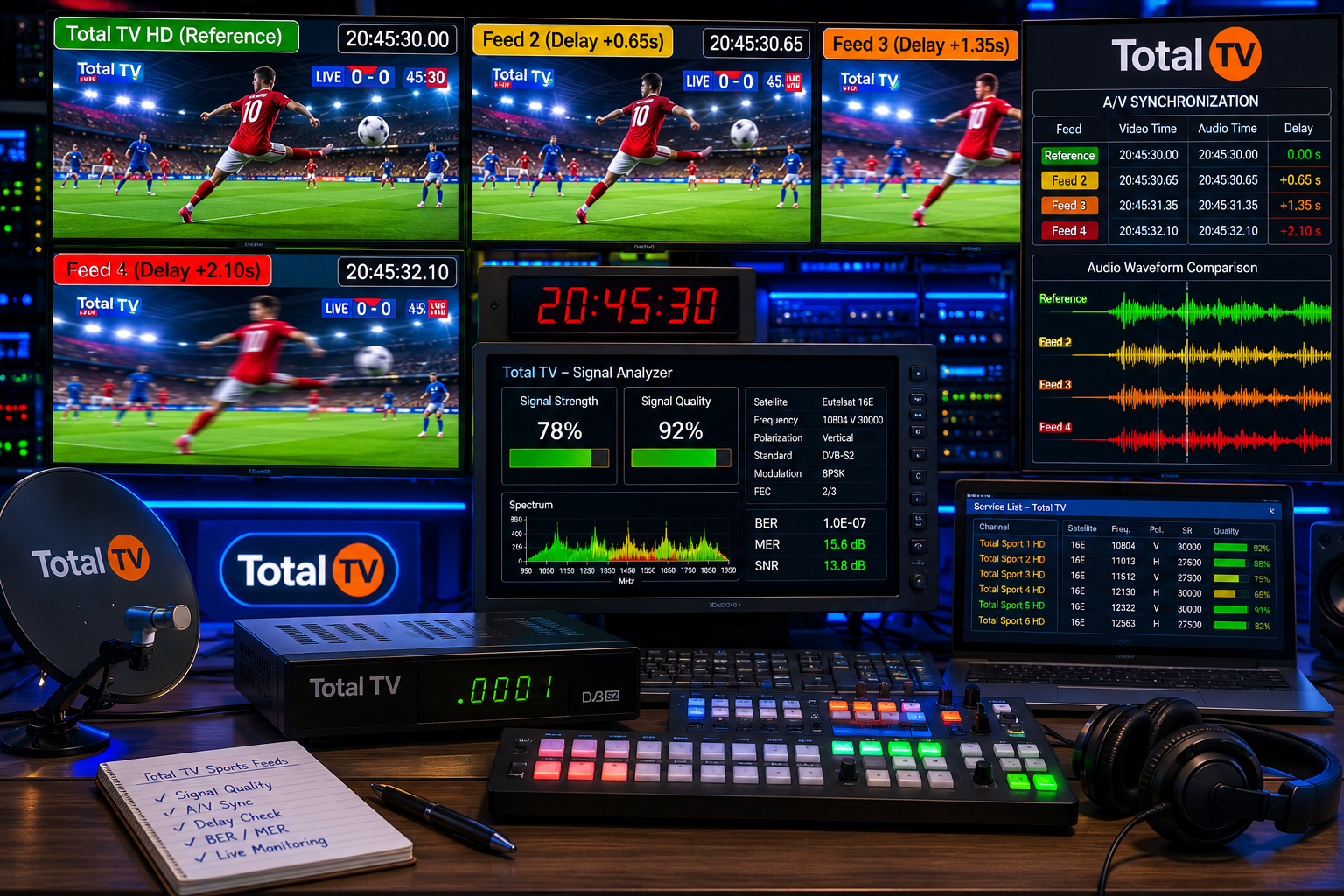
Every Total TV receiver maintains an internal buffer.
Instead of displaying packets immediately, the receiver stores a small amount of data before playback begins.
This protects against brief transmission errors.
If a packet arrives slightly late, the receiver can continue playing from its buffer without interrupting the picture.
Without buffering, even tiny signal fluctuations would produce frequent freezes.
The trade-off is a small increase in viewing delay.
Audio And Video Synchronization
Audio and video are decoded separately.
The receiver continuously keeps both streams synchronized.
This synchronization process requires additional buffering because audio usually requires less processing than video.
The receiver waits until both streams are correctly aligned before displaying them together.
Although the delay is small, it improves overall viewing quality by preventing lip-sync problems.
Different Receivers Produce Different Delays
Not every receiver processes video at the same speed.
Processor performance, firmware design, memory size, and decoder architecture all influence total latency.
One receiver may display the same sports event a second or two earlier than another despite receiving the identical satellite transmission.
Newer hardware often performs decoding more efficiently while maintaining stable synchronization.
Why Internet Feeds Sometimes Differ
Many viewers compare Total TV with online sports streams.
Internet streaming platforms often introduce additional buffering to compensate for changing network conditions.
Some services intentionally maintain larger buffers to reduce interruptions.
Others prioritize lower latency but accept a higher risk of buffering.
As a result, two people watching the same match through different delivery systems may experience noticeably different delays. Network buffering and adaptive streaming strategies are major causes of latency differences between services.
Technical Comparison
| Stage | Purpose | Adds Delay |
|---|---|---|
| Broadcast Production | Mix cameras and graphics | Yes |
| Video Encoding | Compress HD video | Yes |
| Satellite Transmission | Deliver signal | Small fixed delay |
| Receiver Buffer | Prevent freezing | Yes |
| Synchronization | Match audio and video | Yes |
| Television Processing | Enhance picture | Sometimes |
How To Minimize Delay
Although broadcast latency cannot be eliminated completely, viewers can reduce unnecessary delay.
Keep receiver firmware updated.
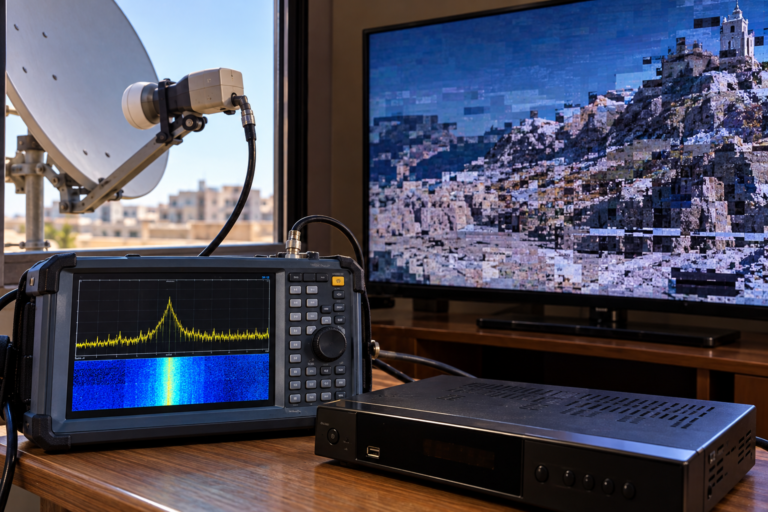
Maintain strong signal quality to reduce decoder recovery time.
Disable excessive television image processing if low latency is more important than picture enhancement.
Avoid unnecessary HDMI processing devices that introduce additional buffering.
Stable reception allows the receiver to operate with fewer synchronization corrections, resulting in smoother and sometimes slightly faster playback.
If your Total TV channels occasionally freeze before recovering, understanding the reception chain can also help explain why latency increases during unstable conditions. Read The Real Reason Total TV Channels Suddenly Freeze for a detailed explanation.
Sports feed delay is usually the combined result of production processing, compression, buffering, decoding, and synchronization. The satellite itself contributes only a portion of the total latency, while receiver and television processing often account for additional delay.
The hidden reason Total TV sports feeds lag behind is not a slow satellite but the complete broadcast workflow. Every stage, from live production to video compression, satellite delivery, receiver buffering, and display processing, adds a small amount of latency. When combined, these delays create the differences viewers notice between television services. A well-configured receiver and a strong reception system minimize additional delay while maintaining stable, high-quality playback.
FAQ
| Question | Answer |
|---|---|
| Why do friends celebrate goals before I see them? | Different broadcast and decoding chains create different end-to-end delays. |
| Does the satellite create all the delay? | No. Most latency comes from processing, compression, buffering, and synchronization. |
| Can my receiver affect sports feed delay? | Yes. Different receivers buffer and decode video differently. |
| Does signal quality influence delay? | Yes. Poor signal quality can force additional decoder recovery and buffering. |
| Can television settings increase latency? | Yes. Motion enhancement and other image-processing features may add delay. |
| Can broadcast latency be eliminated completely? | No. Some delay is unavoidable because every stage of digital broadcasting requires processing time. |