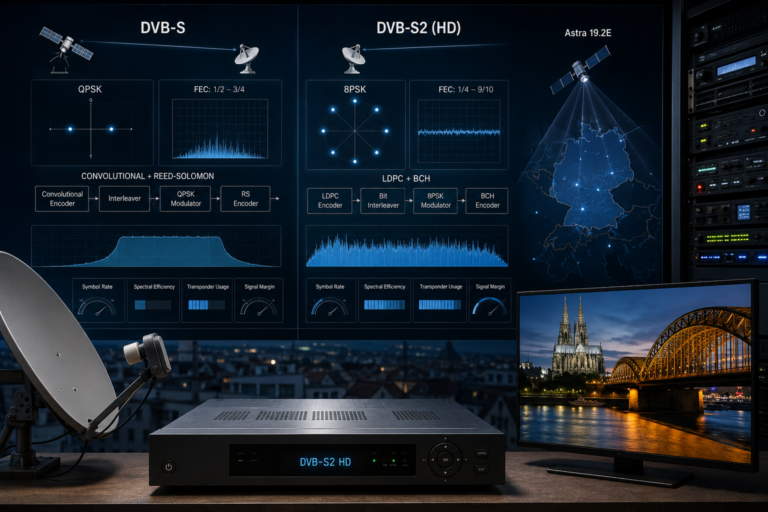
German Channels Grouping Astra 19.2 Explained
Estimated reading time: 12 minutes.
German TV channels on Astra 19.2 may look like a simple list inside your receiver, but technically they are not arranged randomly. Every group of channels is part of a structured system based on transponders, multiplexing, and signal distribution logic. This grouping is not just for organization. It directly affects how channels behave when signal conditions change.
If you ever noticed that several German channels disappear together or break at the same time, that is not a coincidence. It usually means those channels belong to the same signal group. Understanding how grouping works on Astra 19.2 helps you move from guessing problems to diagnosing them with real technical logic.
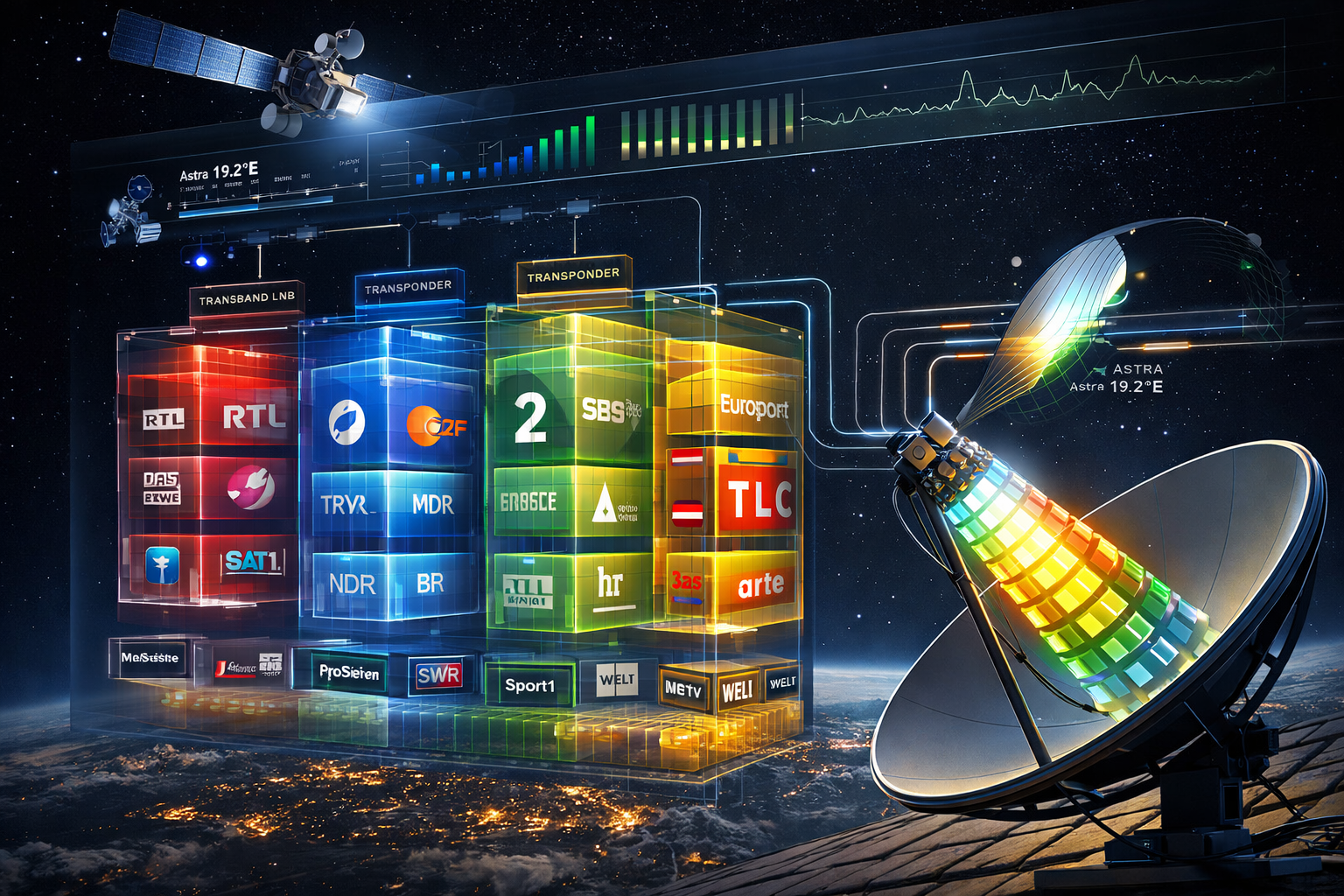
German TV channels are grouped inside digital transport streams carried by transponders. Each group shares the same frequency, polarization, and modulation parameters. This means reception issues often affect entire groups, not individual channels.
- What channel grouping really means on Astra 19.2
- Understanding multiplex structure and channel clusters
- Why grouping affects real world signal behavior
- How receivers display grouped channels
- Signal strength and quality impact on grouped channels
- Why some channel groups fail while others stay stable
- LNB behavior and its effect on channel groups
- Analytical grouping diagnosis table
- Practical steps to diagnose grouped channel issues
- FAQ
What channel grouping really means on Astra 19.2
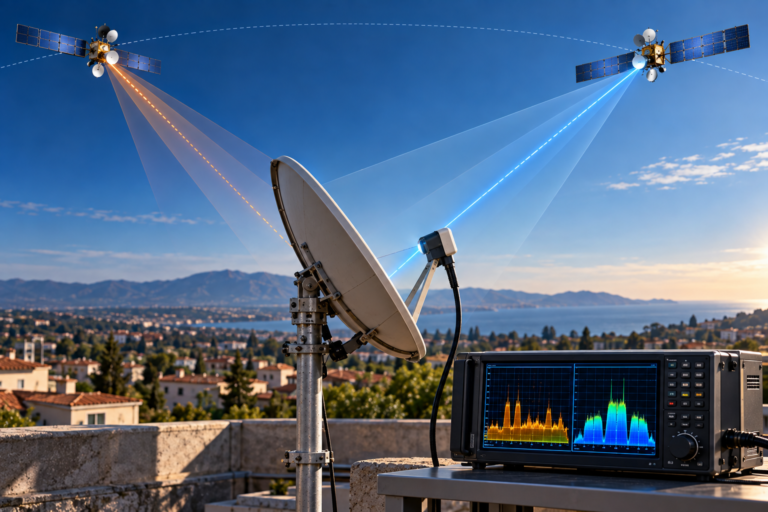
Channel grouping on Astra 19.2 is based on how signals are transmitted from the satellite. Instead of sending each German TV channel separately, the system combines multiple channels into one digital stream. This stream is then broadcast through a single transponder.
From a technical perspective, a group is a collection of services sharing the same transmission parameters. That includes frequency, polarization, symbol rate, and modulation. Because of this, channels in the same group behave almost identically under changing signal conditions.
This explains why grouping is critical in troubleshooting. When you see a pattern where several channels fail together, the system is not malfunctioning randomly. It is reflecting how those channels are physically organized in the signal structure.
Understanding multiplex structure and channel clusters
A multiplex is the digital container that holds multiple channels together. Inside this container, video streams, audio streams, and service data are combined into one transport stream. This stream is then modulated and transmitted through a transponder.
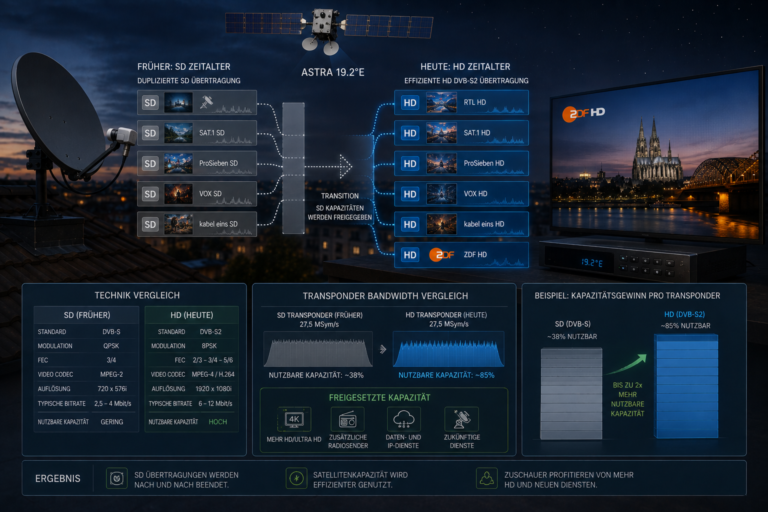
German TV channels on Astra 19.2 are arranged into these multiplex clusters based on broadcaster requirements and bandwidth efficiency. Some clusters may contain HD channels, others SD channels, and others mixed content depending on the platform design.
This clustering is not visible directly to the viewer. However, it becomes very clear when problems occur. If one multiplex fails to lock properly, every channel inside that cluster becomes unavailable or unstable at the same time.
Why grouping affects real world signal behavior
Grouping determines how signal issues appear in real situations. If a single German channel had its own independent transmission path, failures would be isolated. But because channels are grouped, problems propagate across the entire cluster.
For example, if a transponder signal weakens slightly due to alignment drift, all channels within that group will show pixelation or disappear together. This is not because those channels are related in content, but because they share the same signal container.
This is why experienced technicians do not focus on individual channels first. They look at which group is affected. That immediately narrows down the possible causes and avoids unnecessary adjustments.
How receivers display grouped channels
Receivers do not show grouping directly. Instead, they list channels individually based on service information extracted from the transport stream. During a scan, the receiver locks onto a transponder, reads its data tables, and builds a list of channels found within that signal.
This creates an illusion that channels are independent entries. In reality, they are still tied to the same underlying signal. When the receiver loses lock on that signal, all associated channels become unavailable even though they appear as separate items in the menu.
This behavior often confuses users. They may think several channels failed independently, while the real issue is a single failure at the transponder or multiplex level.
Signal strength and quality impact on grouped channels
Signal strength alone does not guarantee stable grouped channel reception. Strength indicates that some level of RF energy is present. Quality determines whether the signal can be decoded correctly.
When quality drops below a certain threshold, the receiver cannot properly demodulate the transport stream. As a result, all channels in that group become unstable or disappear. This can happen even if the strength bar still looks acceptable.
This is especially important when dealing with grouped channels. Because they share the same signal, any drop in quality affects all of them simultaneously. That is why quality is always the more reliable indicator when diagnosing grouped channel issues.
Why some channel groups fail while others stay stable
Partial channel loss is one of the most common issues on Astra 19.2. This happens when one group of channels disappears while others continue working normally. The reason is that not all groups are transmitted under identical conditions.
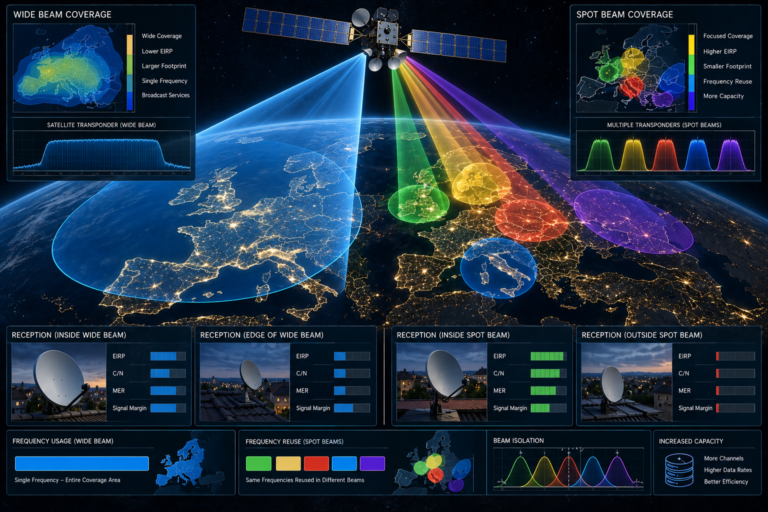
Different transponders may operate on different frequencies, polarization planes, or power levels. Some may be easier to receive due to better alignment with your dish position. Others may require more precise alignment or stronger signal quality to remain stable.
This creates uneven reception margins. A system may perform well overall but still struggle with one specific group. That is why a working dish does not always mean all packages will be equally stable.
LNB behavior and its effect on channel groups
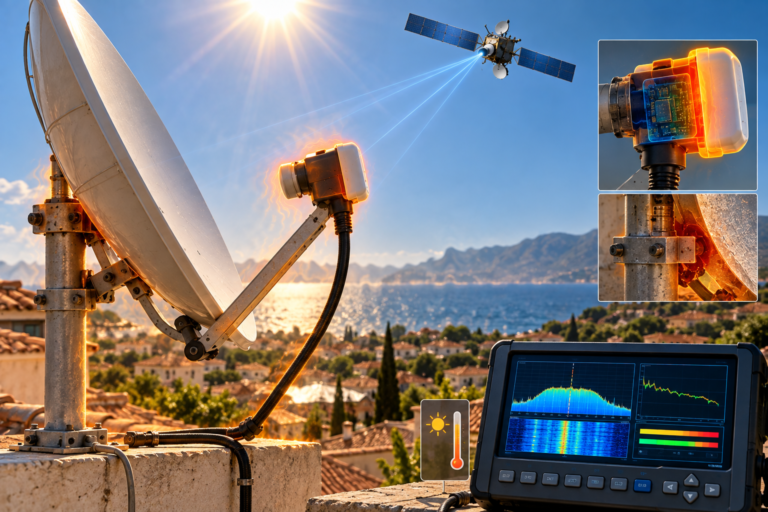
The LNB plays a critical role in how channel groups are received. It selects frequency bands and polarization based on control signals from the receiver. If the LNB does not switch correctly, certain groups may not be received at all.
For example, if the LNB fails to switch to high band, all groups located in that band will disappear. If polarization switching is unstable, only channels in one polarization may be affected. This leads to clear grouping patterns in channel loss.
Understanding this behavior helps identify whether the issue is related to hardware or signal conditions. If the grouping pattern matches a specific band or polarization, the LNB or control path becomes the main suspect.
Analytical grouping diagnosis table
| Observed Pattern | Technical Cause | Meaning | Action |
|---|---|---|---|
| Multiple channels disappear together | Transponder or multiplex failure | Grouped signal loss | Check transponder parameters |
| Only one group unstable | Weak signal on specific frequency | Uneven reception margin | Fine tune dish alignment |
| Channels missing by polarization | LNB switching issue | Polarization path failure | Check LNB and cable voltage |
| Channels disappear during rain | Low signal margin | Weakest group affected first | Improve dish alignment |
| Channels not found in scan | Incorrect frequency data | Receiver scanning wrong parameters | Update transponder list |
Practical steps to diagnose grouped channel issues
Start by identifying which channels are missing. Check if they belong to the same group by looking at their frequency and polarization. This step is critical because it determines whether the issue is grouped or general.
Next, compare signal quality between a working group and the failing group. Focus on quality, not strength. If quality is significantly lower on one group, the issue is likely related to alignment or signal path conditions.
Then inspect your installation. Check connectors, cable condition, and LNB stability. Even small issues in these areas can create selective group failures.
Finally, perform small alignment adjustments if necessary. Move the dish slowly and monitor quality changes. The goal is to improve the weakest group without losing stability on others.
In most real installations, channel grouping reveals the problem faster than signal bars. Users often waste time scanning channels or resetting receivers when the issue is actually a grouped signal weakness. The pattern of channel loss is the most reliable diagnostic clue.
German channel grouping on Astra 19.2 is a core part of how satellite broadcasting works. Channels are not independent signals. They are structured inside shared transmission paths. Once you understand grouping, you can diagnose problems faster, avoid unnecessary fixes, and maintain stable reception with a more technical approach.
FAQ
| Question | Answer |
|---|---|
| Why do multiple German channels fail together | Because they are grouped inside the same transponder or multiplex. A single signal issue affects all of them. |
| Can grouping affect signal quality | Yes. All channels in a group share the same signal quality. If quality drops, the entire group is affected. |
| Does channel grouping change over time | Yes. Broadcasters can reorganize channels across transponders, which may affect scanning and reception. |
| Why do some groups disappear while others stay | Because different groups use different transmission parameters and may have different reception margins. |
| Is rescanning always required when a group disappears | No. First verify signal quality and transponder data. Rescanning alone will not fix signal issues. |