Why Astra Signal Drops at Night Explained
Estimated reading time: 21 minutes.
Many satellite users notice something strange. During the day, Astra 19.2 channels work perfectly. But at night, the signal becomes weaker, unstable, or sometimes disappears completely. This behavior can be confusing, especially when the installation appears correct and nothing has changed physically.
In reality, this issue is not random. Night time signal drops are often the result of subtle physical and environmental changes that affect how the satellite signal travels and how your system receives it. Understanding these changes helps explain why the same setup can behave differently depending on the time of day.
Quick Context
This guide explains why Astra signal drops at night including temperature changes atmospheric effects dish alignment sensitivity LNB behavior and signal stability factors.
- Why signal behavior changes over time
- Temperature changes and dish movement
- Material expansion and contraction effects
- Alignment sensitivity at night
- Atmospheric conditions after sunset
- Humidity and signal absorption
- LNB performance variations
- Cable behavior in cooler temperatures
- Signal margin and stability limits
- How to diagnose night signal drops
- Typical night signal scenarios
- Reality Check
- Final Verdict
- Frequently Asked Questions
Why signal behavior changes over time
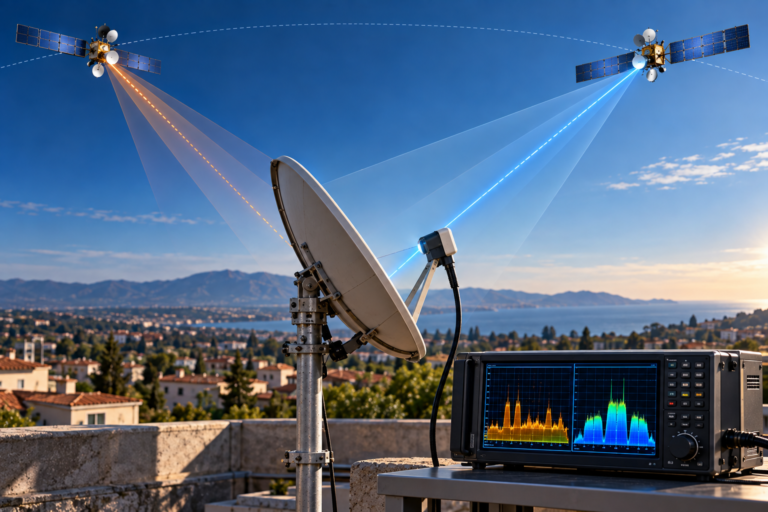
Satellite signals are affected by both physical hardware and environmental conditions. These factors do not remain constant throughout the day.
Temperature, humidity, and atmospheric density all change between day and night.
These changes can slightly alter how signals travel and how equipment behaves.
Even small variations can affect reception stability.
Temperature changes and dish movement
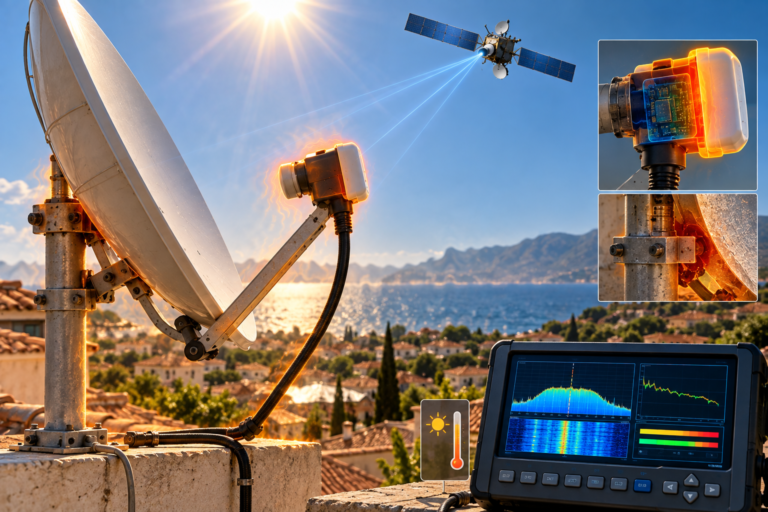
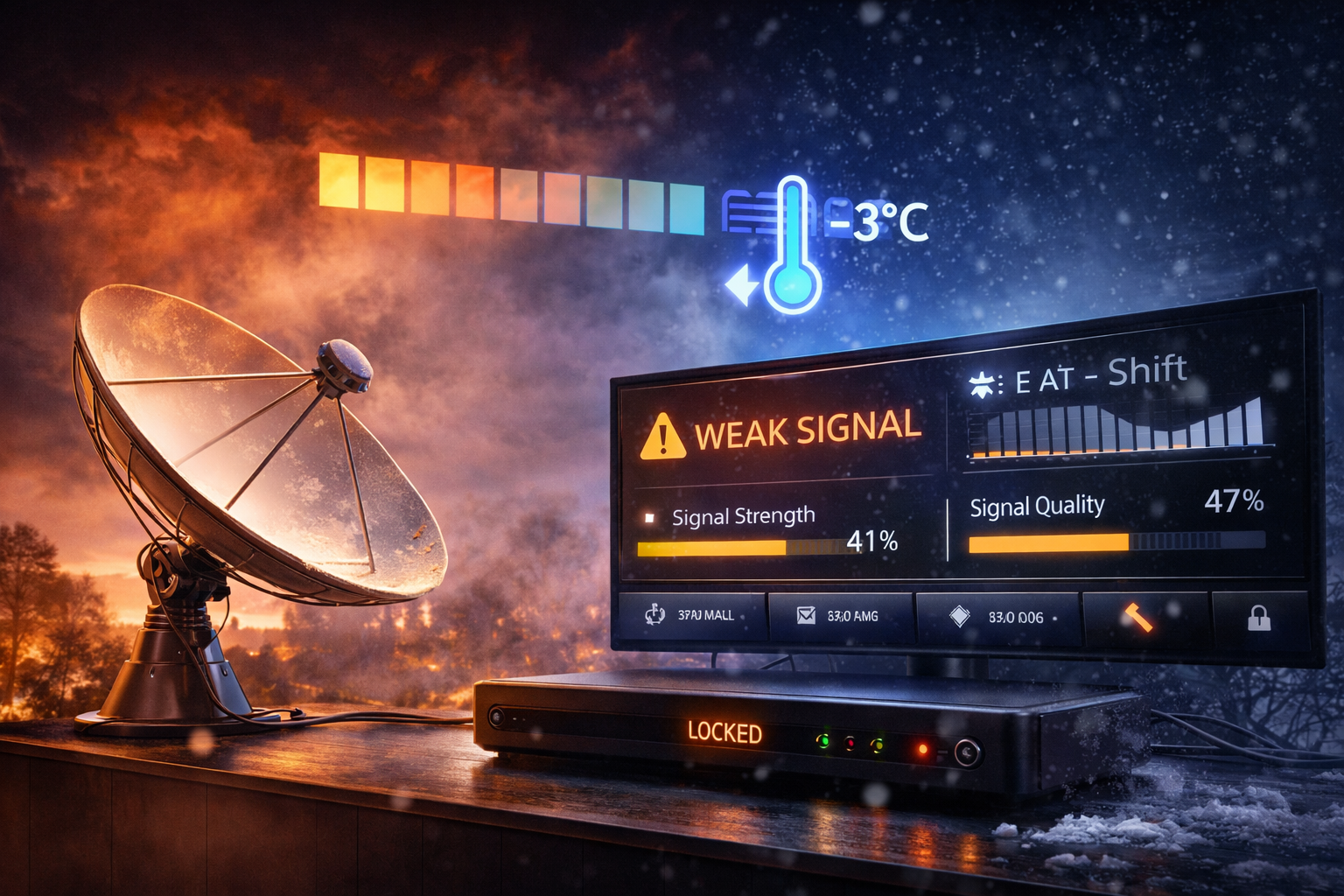
During the day, sunlight heats the satellite dish and mounting structure. At night, temperatures drop and materials cool down.
This causes slight contraction of metal components.
Even minimal movement can affect dish alignment.
Since satellite alignment requires high precision, small shifts can reduce signal quality.
Material expansion and contraction effects
Metal expands when heated and contracts when cooled. This physical property affects dish brackets, mounts, and support structures.
If the installation is not perfectly rigid, these changes can alter the dish angle.
This effect is usually very small but becomes noticeable when alignment is already near its limit.
Proper installation reduces sensitivity to these changes.
Alignment sensitivity at night
If the dish is not perfectly aligned, it may still work during the day due to stronger signal conditions.
At night, when conditions change, the margin for error becomes smaller.
This makes misalignment more noticeable.
A perfectly aligned dish remains stable under all conditions.
Atmospheric conditions after sunset
After sunset, the atmosphere cools and becomes more stable. This changes how signals propagate.
Temperature layers in the atmosphere can affect signal refraction.
These changes are subtle but can influence reception quality.
Atmospheric behavior plays a role in signal variation.
Humidity and signal absorption
Humidity levels often increase at night. Moist air can absorb or scatter parts of the signal.
This effect is usually small but can contribute to signal weakening.
Combined with other factors, it can reduce signal stability.
Environmental moisture is an often overlooked factor.
LNB performance variations
The LNB is sensitive to temperature changes. Its electronic components may behave slightly differently under cooler conditions.
This can affect signal conversion efficiency.
While modern LNBs are designed to handle temperature variation, performance may still vary slightly.
Stable equipment minimizes these effects.
Cable behavior in cooler temperatures
Coaxial cables can also be affected by temperature changes. Electrical resistance and signal transmission characteristics may vary slightly.
In most cases, this effect is minimal but can contribute to overall signal variation.
Poor quality cables are more sensitive to environmental changes.
Good cabling ensures consistent signal delivery.
Signal margin and stability limits
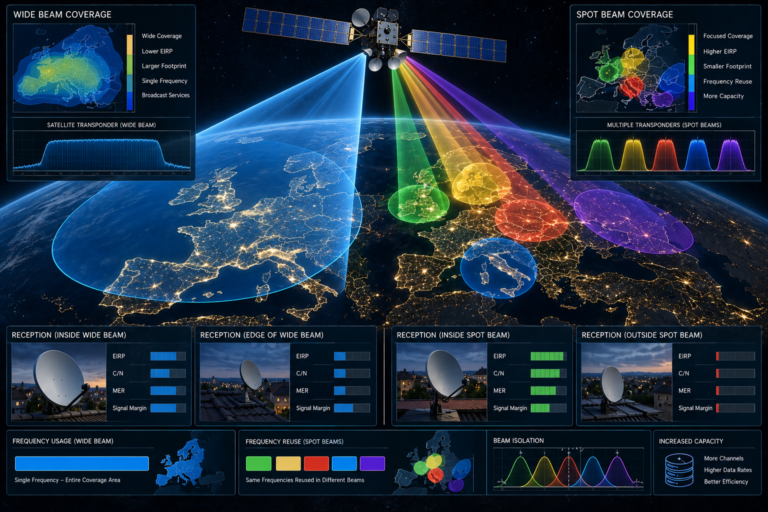
Every satellite system operates within a signal margin. This margin represents the difference between stable reception and signal loss.
If your system operates close to the minimum required level, small changes can push it below the threshold.
Night time conditions may reduce this margin.
Systems with strong signal margins remain stable under varying conditions.
How to diagnose night signal drops
If signal drops only occur at night, check dish alignment first. Slight misalignment is the most common cause.
Inspect mounting stability and ensure the dish is firmly secured.
Check LNB positioning and cable connections.
Improving alignment and signal margin usually resolves the issue.
Typical night signal scenarios
| Scenario | Cause | Explanation |
|---|---|---|
| Signal drops only at night | Alignment sensitivity | Minor dish shift affects reception |
| Weak signal after sunset | Temperature change | Material contraction alters angle |
| Intermittent night signal | Atmospheric conditions | Humidity and air layers affect signal |
| Stable day unstable night | Low signal margin | System operating near threshold |
Reality Check
Night time Astra signal drops are usually caused by small physical or environmental changes rather than major system faults. Improving alignment and signal margin often resolves the issue.
Final Verdict
Final Verdict
Astra signal drops at night are not random events but the result of temperature changes atmospheric conditions and system sensitivity. Slight shifts in dish alignment, combined with reduced signal margin, can lead to noticeable reception issues. By ensuring precise alignment stable mounting and strong signal levels, users can maintain consistent performance regardless of time of day.
Frequently Asked Questions
| Question | Answer |
|---|---|
| Why does my Astra signal drop only at night | Usually due to temperature related alignment changes or reduced signal margin. |
| Can weather affect night signal | Yes humidity and atmospheric changes can influence reception. |
| Is this a hardware problem | Not necessarily. It is often related to alignment and environment. |
| How to fix night signal drops | Improve dish alignment and ensure stable installation. |