How to Align Dish for Astra 19.2
Estimated reading time: 16 minutes.
Aligning a satellite dish correctly is the most important step when receiving television channels from the Astra satellite at 19.2 degrees east. When the dish points precisely toward the satellite position viewers can receive dozens of German channels with stable signal quality.
Even a small alignment error can reduce signal strength or cause channels to disappear during scanning. Understanding how dish alignment works allows households to maintain reliable satellite reception for many years without constant adjustments.
Quick Context
This guide explains how to align a satellite dish for Astra 19.2 including azimuth direction elevation angle and LNB adjustment to achieve stable reception of German television channels.
Understanding the Astra 19.2 satellite position
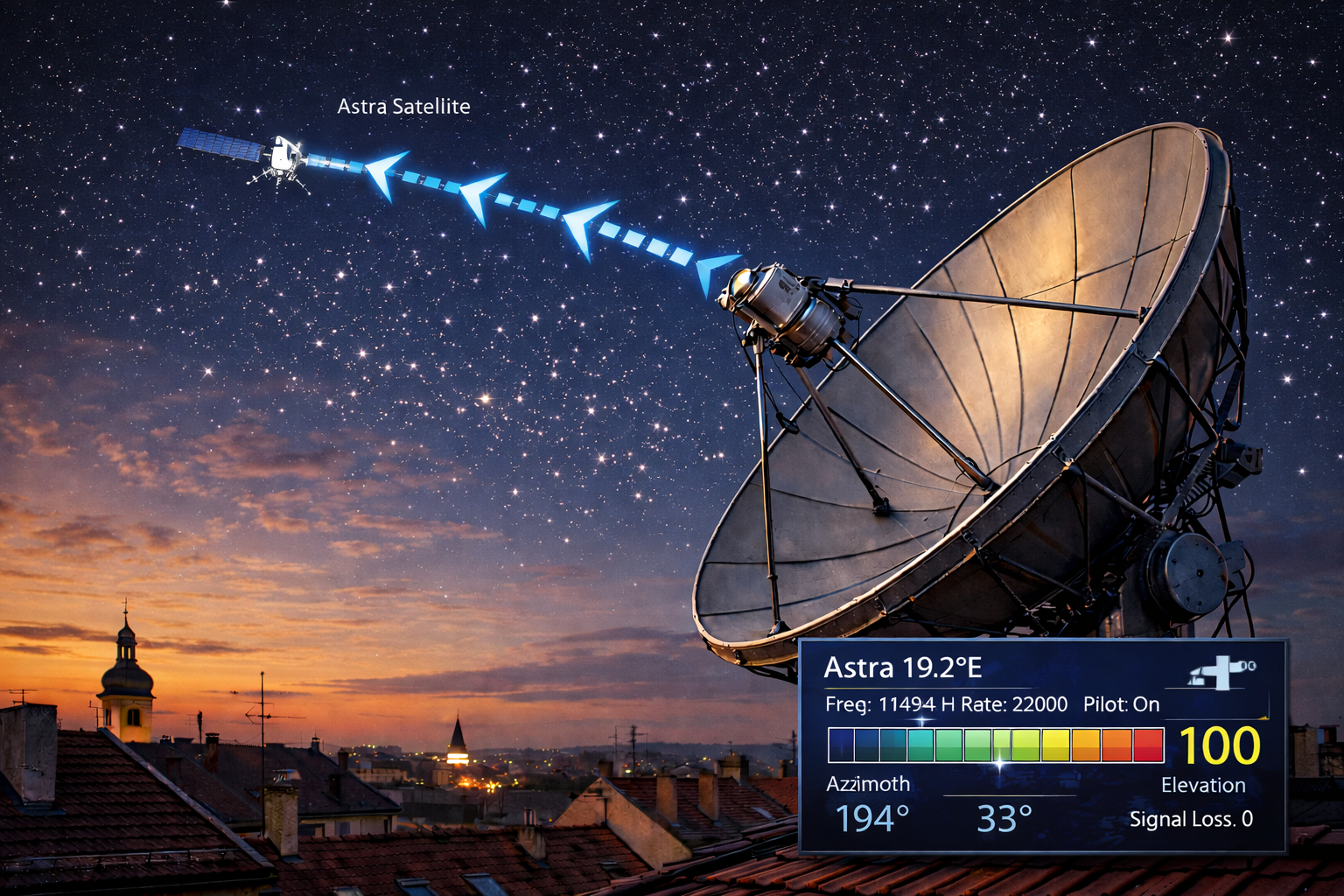
The Astra satellite group used for German television broadcasting is located at an orbital position of 19.2 degrees east. From the perspective of viewers in Europe this means the satellite appears in the southern sky.
When aligning a dish the goal is to point the reflector toward this position so it can collect the signal transmitted from the satellite.
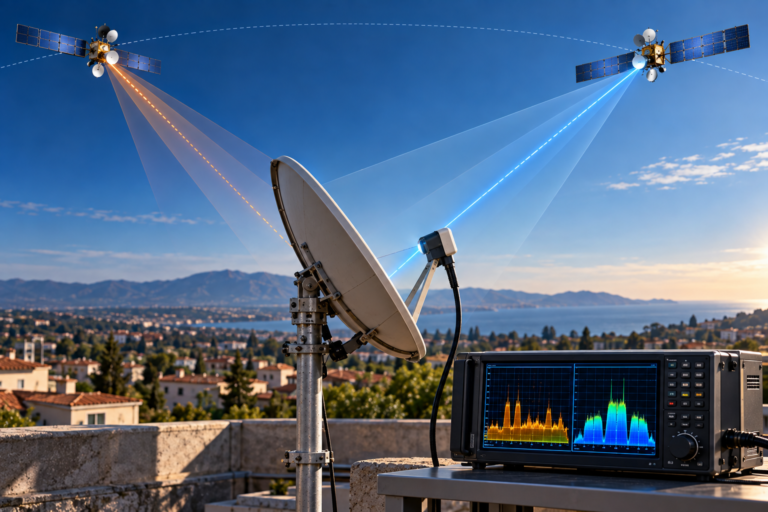
Because satellites orbit thousands of kilometers above the Earth the signal arrives from a very specific direction. The dish must be pointed precisely toward that location in order to capture the strongest signal.
Accurate alignment ensures the LNB receives a strong and stable signal for decoding.
Azimuth direction adjustment
Azimuth refers to the horizontal direction of the satellite dish. When adjusting azimuth the installer rotates the dish left or right until it faces the correct satellite position.
In Germany Astra 19.2 is typically located slightly southeast in the sky. However the exact azimuth angle depends on the geographic location of the installation.
Installers often begin by pointing the dish roughly toward the southeast before fine tuning the direction using the receiver signal meter.
Small movements of only a few degrees can significantly change signal strength during alignment.
Elevation angle setup
Elevation determines how high the dish points above the horizon. This vertical angle ensures the dish is aimed directly toward the satellite’s position in orbit.
Most satellite mounts include elevation markings that help installers adjust the angle accurately.
For Astra 19.2 the elevation angle in Germany typically ranges between twenty eight and thirty four degrees depending on the region.
Once the approximate elevation is set installers slowly adjust the dish until the signal indicator reaches its highest value.
LNB skew alignment
The LNB mounted at the front of the dish must also be adjusted during installation. The device needs to be rotated slightly to match the polarization angle of the satellite signal.
This rotation is known as the skew angle. Proper skew alignment improves signal quality and ensures the receiver can decode both horizontal and vertical transponders.
Incorrect LNB skew can cause signal interference or prevent certain channels from being detected during scanning.
In most installations only small adjustments are required to achieve the correct angle.
Using signal meters for alignment
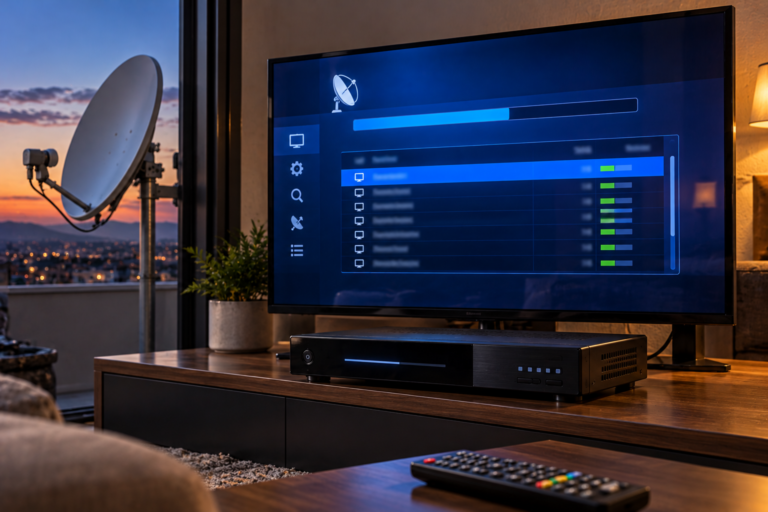
Modern satellite receivers include built in signal meters that help installers align the dish accurately. These meters display signal strength and signal quality in real time.
While adjusting the dish the installer watches the signal indicator and slowly moves the dish until the highest reading is achieved.
This method ensures the dish is positioned precisely toward the satellite.
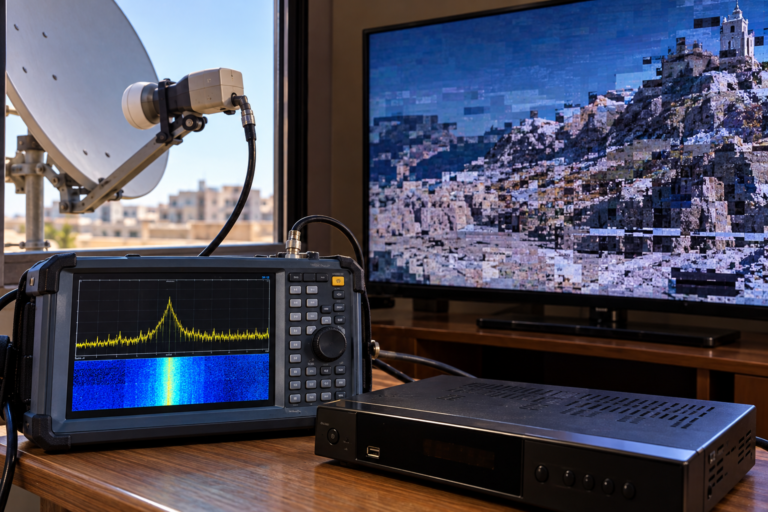
Professional installers sometimes use dedicated satellite meters that provide even more precise signal measurements.
Common installation locations
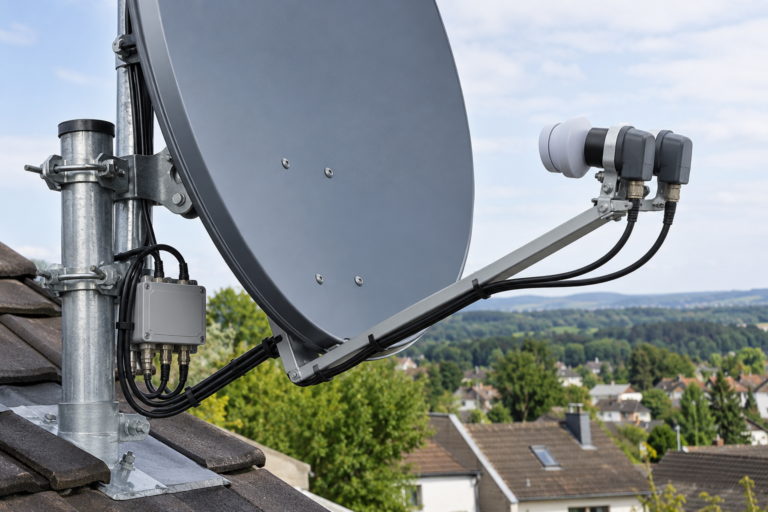
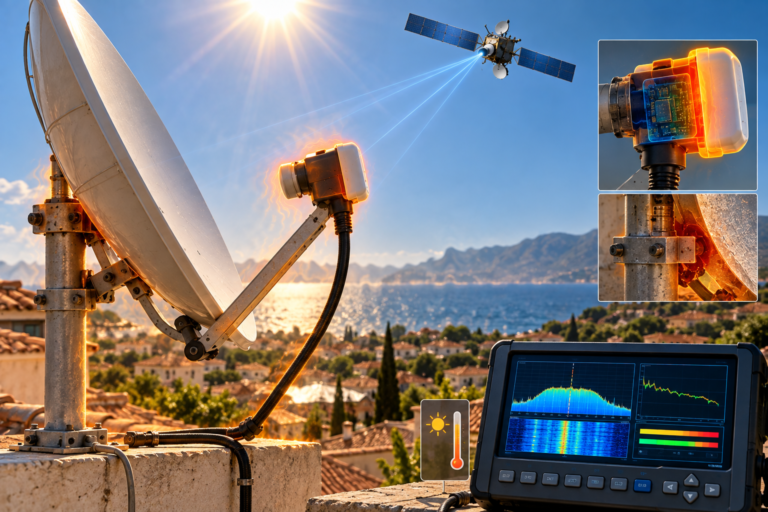
Satellite dishes are usually installed on rooftops balconies or exterior walls. The most important requirement is a clear line of sight toward the southern sky.
Any obstacle between the dish and the satellite can block the signal. Trees buildings or structural elements may prevent proper reception.
For this reason installers typically place dishes in elevated positions where the satellite remains visible throughout the year.
A stable mounting bracket is also important because strong winds can move poorly secured dishes and reduce alignment accuracy.
Typical Astra alignment parameters
| Alignment element | Purpose | Effect on reception |
|---|---|---|
| Azimuth | Horizontal direction | Points dish toward satellite position |
| Elevation | Vertical angle | Targets the satellite height in orbit |
| LNB skew | Polarization alignment | Improves signal quality |
| Dish stability | Mounting security | Prevents signal loss from movement |
Reality Check
Most Astra reception issues occur because of minor alignment errors. Once the dish is properly aligned and secured satellite reception typically remains stable for long periods.
Final Verdict
Final Verdict
Accurate dish alignment is the foundation of reliable satellite reception. By correctly adjusting azimuth elevation and LNB skew households can receive German television channels from Astra 19.2 with stable signal quality.
Frequently Asked Questions
| Question | Answer |
|---|---|
| Which direction should a dish face for Astra 19.2 | In most parts of Europe the dish should face the southern sky slightly toward the southeast. |
| Does elevation angle matter for satellite reception | Yes correct elevation ensures the dish points at the correct height toward the satellite. |
| What is LNB skew | LNB skew is the rotation of the LNB used to match the polarization of the satellite signal. |
| Can wind affect dish alignment | Yes strong winds can move poorly mounted dishes and reduce signal quality. |