Austria Sports Channels 2026 Channel Loyalty Behavior
Estimated reading time: 14 minutes.
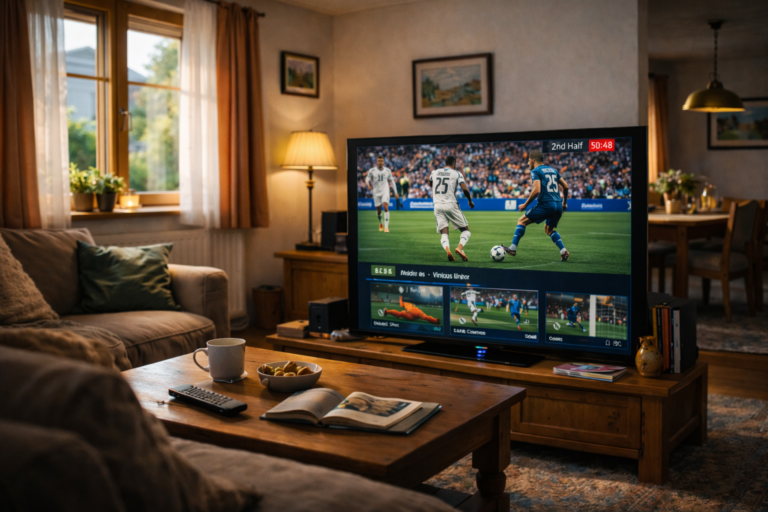
In Austria in 2026, sports viewers are surrounded by many channels and competitions. Yet despite the large number of options, many viewers return to the same sports channel again and again.
This behavior is known as channel loyalty. It develops over time through familiarity, trust, and consistent viewing experience. It also connects strongly with how viewers behave during weekend sports viewing in Austria, where repeated channel use strengthens long term habits.
Quick Context
This article explores channel loyalty behavior in Austria in 2026 and how viewers build long term habits with specific sports channels.
- What channel loyalty means in sports TV
- Trust and familiarity with broadcasters
- Routine based channel selection
- Habit formation through repeated viewing
- Personal identity and favorite leagues
- Reduced channel switching behavior
- Comfort and predictability of known channels
- Channel loyalty behavior pattern
- Reality Check
- Final Verdict
- Frequently Asked Questions
What channel loyalty means in sports TV
Channel loyalty means that a viewer repeatedly chooses the same sports channel over time. Even when other options are available, the viewer returns to a familiar broadcaster.
This reduces the need to search for new content.
Trust and familiarity with broadcasters
Viewers develop trust in certain channels based on quality, commentary style, and coverage. Familiar presenters and graphics create a sense of stability.
This trust strengthens loyalty.
Routine based channel selection
Many viewers do not actively choose a new channel each time. They follow a routine where a specific channel is selected automatically.
This saves time and mental effort.
Habit formation through repeated viewing
Repeated viewing of the same channel builds habit. Over time, the viewer associates certain days or competitions with that channel.
This habit becomes automatic.
Personal identity and favorite leagues
Channel loyalty is also linked to personal identity. Viewers follow specific teams, leagues, or sports, and they choose the channel that consistently covers them.
This creates a strong emotional connection.
Reduced channel switching behavior
Loyal viewers switch channels less often. They prefer to stay on one channel for longer sessions.
This creates a more stable viewing experience.
Comfort and predictability of known channels
Familiar channels provide a predictable structure. Viewers know what type of content to expect and when to expect it.
This comfort makes viewing more relaxing.
Channel loyalty behavior in Austria 2026
| Behavior stage | Viewer action | Effort level |
|---|---|---|
| Initial choice | Selecting familiar channel | Low effort |
| During viewing | Staying on same channel | Very low effort |
| Repeated sessions | Returning to same broadcaster | Habit based |
| Long term | Strong channel loyalty | Automatic behavior |
Reality Check
Channel loyalty in Austria in 2026 is a natural response to the large number of available sports channels. Viewers simplify their choices by returning to familiar broadcasters.
Final Verdict
Final Verdict
Austria sports channels in 2026 are part of strong loyalty patterns. Viewers build habits around trusted channels and reduce decision fatigue by sticking to familiar broadcasters. Channel loyalty is a key element of stable and consistent sports viewing behavior.
Frequently Asked Questions
| Question | Answer |
|---|---|
| Why do viewers stay loyal to one sports channel | Because they trust the content and feel familiar with the presentation. |
| Does loyalty reduce channel switching | Yes, loyal viewers tend to stay on one channel for longer periods. |
| Is channel loyalty based on teams or broadcasters | It is often a mix of both favorite teams and trusted broadcasters. |
| Does channel loyalty make viewing easier | Yes, it reduces the need to choose between many options. |