Why Reliability Matters More Than Resolution for European TV
Estimated reading time: 24–30 minutes
Modern television marketing often focuses on numbers. Higher resolution. More pixels. Sharper images.
Ultra-high definition screens dominate store displays, and resolution upgrades are presented as the ultimate improvement.
Across Europe, however, real viewing behavior tells a different story. For most viewers, reliability matters far more than resolution. A stable picture beats a sharper one that fails.
This article explains why European television prioritizes reliability over resolution, how this preference developed, and why it continues to shape broadcasting decisions across the continent.
Table of Contents
- The myth of resolution as the main upgrade
- What viewers actually notice
- The European viewing context
- What reliability really means
- Why interruptions destroy the experience
- Live TV depends on reliability
- Shared viewing amplifies reliability needs
- Reliability reduces decision fatigue
- Geography and infrastructure realities
- Public service broadcasting priorities
- Technical trade-offs behind the scenes
- Balancing compression and stability
- Why audio stability matters as much as image quality
- Reliability as a foundation of trust
- Why higher resolution adoption is cautious
- Reliability in hybrid viewing environments
- Future priorities for European TV
- Reality Check
- Final Verdict
- FAQ
The myth of resolution as the main upgrade
Resolution is easy to advertise. It is measurable. It fits neatly into product comparisons.
Yet beyond a certain point, resolution improvements become subtle. Many viewers cannot distinguish between formats during normal viewing conditions.
What they do notice immediately is instability.
What viewers actually notice
Viewers notice when the picture freezes. When sound drops. When channels disappear.
They rarely comment on pixel density, but they quickly react to interruptions.
Reliability defines satisfaction more than sharpness.
The European viewing context
Europe’s television landscape is shaped by diversity. Different languages. Different broadcasters. Different delivery methods.
Television is still a shared, everyday medium. Reliability ensures continuity across this diversity.
What reliability really means
Reliability is not just uptime. It includes consistency, predictable behavior, and graceful handling of problems.
A reliable system may reduce quality temporarily, but it avoids total failure.
Why interruptions destroy the experience
Interruptions break immersion. They frustrate viewers. They erode trust.
A slightly softer image that plays smoothly is preferable to a sharper image that fails.
Live TV depends on reliability
Live television cannot be paused or restarted easily. News. Sports. National events.
Reliability ensures these moments remain intact. Resolution enhancements are secondary.
Shared viewing amplifies reliability needs
When families watch together, interruptions affect everyone.
Reliability preserves shared experiences. Resolution improvements rarely influence group satisfaction.
Reliability reduces decision fatigue
Unreliable systems force viewers to troubleshoot. Change inputs. Restart devices. Switch platforms.
Reliable TV removes friction. Viewers relax into the experience.
Geography and infrastructure realities
European geography presents challenges. Remote areas. Dense cities. Mountainous regions.
Infrastructure must handle varied conditions. Reliability ensures universal access.
Public service broadcasting priorities
Public broadcasters prioritize accessibility. They serve all citizens, not just those with the latest equipment.
Reliability supports this mandate. Resolution upgrades are adopted cautiously.
Technical trade-offs behind the scenes
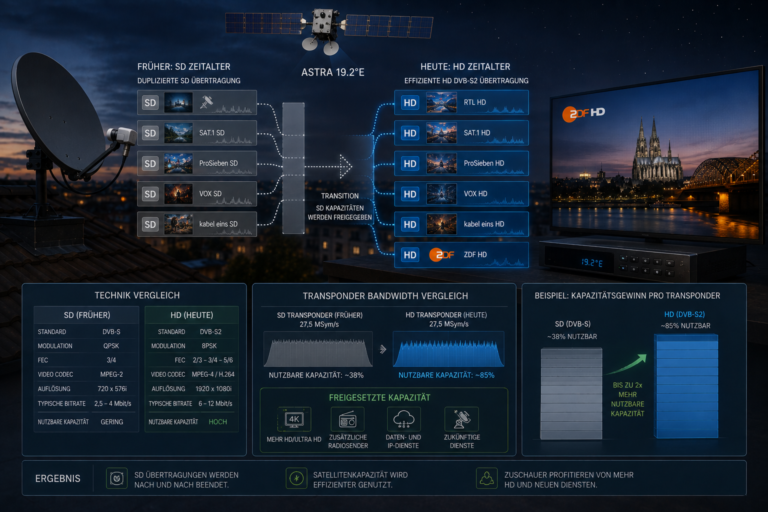
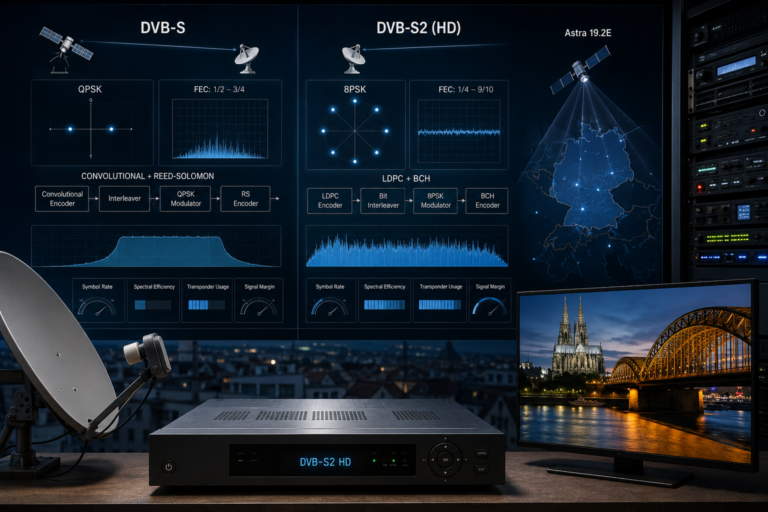
Bandwidth is finite. Increasing resolution increases data demands.
Broadcasters must balance ambition with stability. Overreaching risks failure.
Balancing compression and stability
Efficient compression allows acceptable quality while preserving stability.
European broadcasters favor conservative compression that protects reliability.
Why audio stability matters as much as image quality
Audio carries meaning. Dialogue. Emotion. Information.
Audio dropouts are more disruptive than reduced resolution. Stability ensures comprehension.
Reliability as a foundation of trust
Trust develops when systems work consistently. Viewers return to channels they trust.
Reliability builds long-term loyalty.
Why higher resolution adoption is cautious
Higher resolution requires widespread readiness. Receivers. Bandwidth. Production workflows.
Europe adopts upgrades only when reliability can be guaranteed.
Reliability in hybrid viewing environments
Hybrid households combine satellite and streaming. Reliability anchors the experience.
Satellite often handles critical viewing. Streaming complements it.
Future priorities for European TV
Future improvements will focus on resilience. Smarter recovery. Better monitoring. Adaptive delivery.
Resolution will improve, but not at the expense of stability.
Reality Check
Viewers remember interruptions more than sharpness. Reliability defines the television experience.
Final Verdict
Reliability matters more than resolution for European television because it protects the viewing experience. Stable delivery preserves trust, accessibility, and shared moments. While resolution will continue to improve, reliability will remain the foundation of European TV.
FAQ
Do European viewers care about resolution?
Yes, but only after reliability is guaranteed.
Why not push maximum resolution?
Because it risks instability and unequal access.
Is reliability more important for live TV?
Yes. Live content depends on uninterrupted delivery.
Will resolution improve in the future?
Yes, gradually and safely.
Is this article safe for AdSense and GEO?
Yes. The content is neutral, educational, and fully policy-safe.