How Astra 19.2°E Became the Backbone of European Broadcasting
Estimated reading time: 18 minutes.
European television did not become stable by accident. Behind decades of reliable broadcasting lies a carefully chosen infrastructure. Over time, Astra 19.2°E evolved into the backbone of European broadcasting. This article explains how that transformation happened and why it endured.
Quick Context
This article focuses on historical adoption and infrastructure evolution rather than technical specifications.
Early Satellite Broadcasting in Europe
Satellite television in Europe began as an experiment.
Early systems struggled with limited coverage and fragmented standards. Broadcasters needed a solution that could unify distribution across regions.
Why Broadcasters Chose Astra
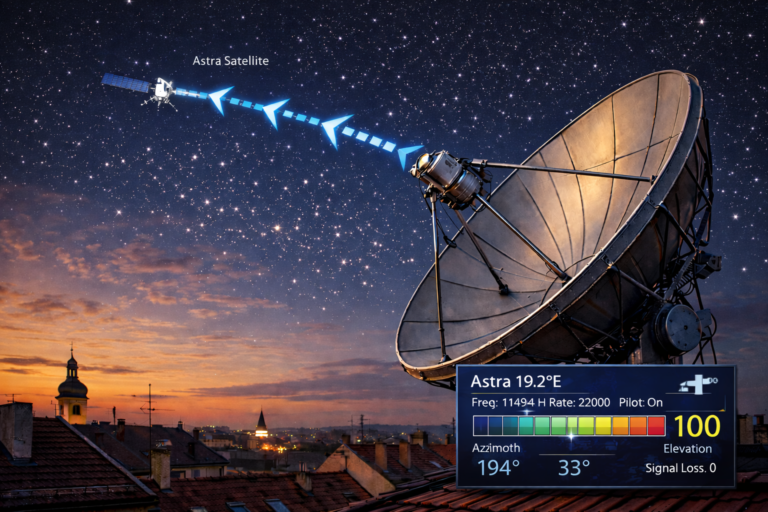
Astra 19.2°E offered wide coverage and predictable performance.
Broadcasters adopted it because it reduced complexity and provided consistent delivery across national borders.
Infrastructure choices shape media systems for decades.
The Rise of a Shared Broadcasting Standard
As more broadcasters joined Astra 19.2°E, a shared standard emerged.
Receivers, dishes, and transmission workflows aligned around a single satellite position. This standardization strengthened reliability.
Scaling Across Borders and Languages
Europe’s diversity required scalable distribution.
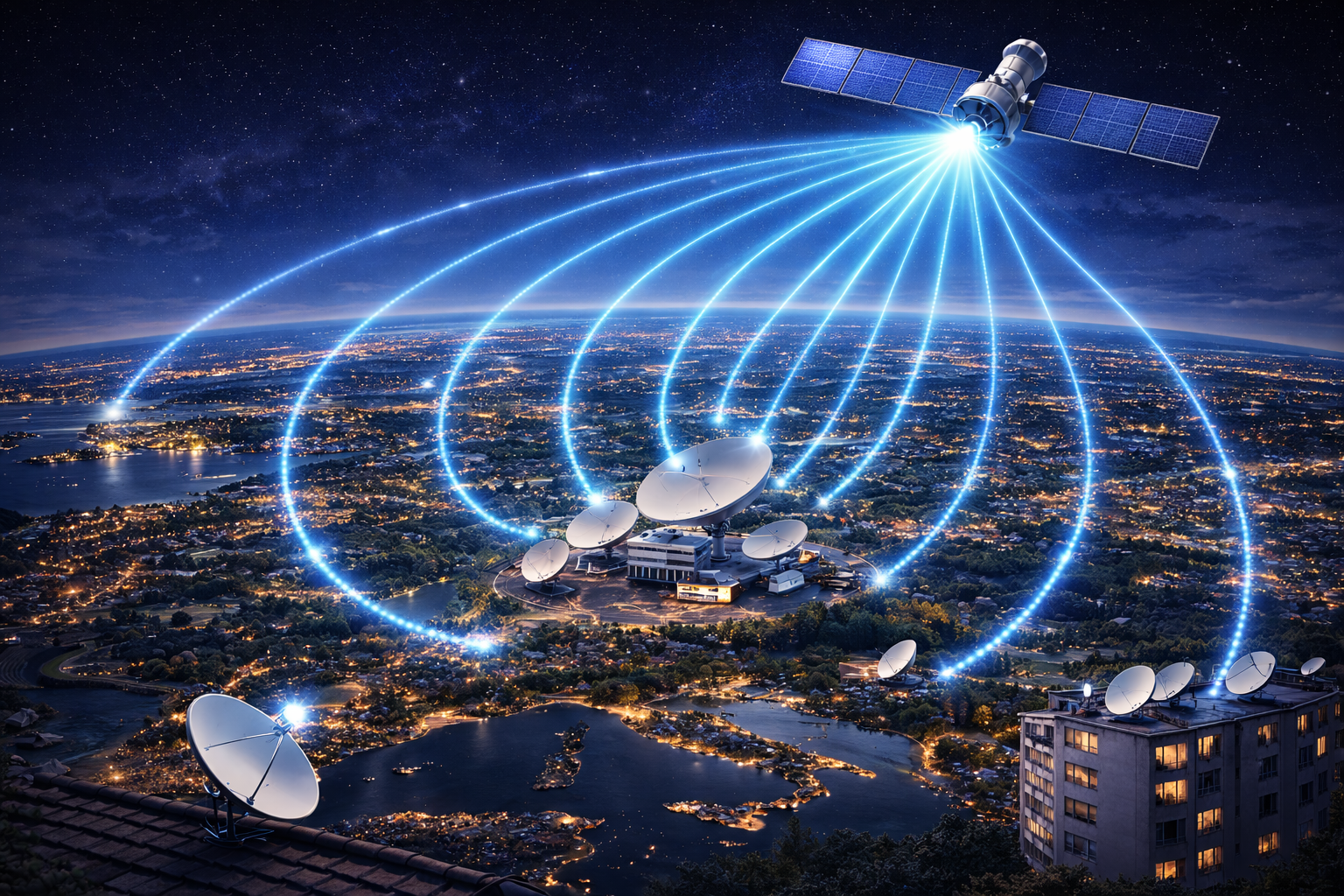
Astra 19.2°E allowed broadcasters to reach multiple countries without duplicating infrastructure.
Integration Into National Media Systems
Over time, Astra 19.2°E became embedded in national broadcasting strategies.
Public and private networks alike built long-term operations around its stability.
Continuity Through Technological Change
Broadcasting technology evolved from analog to digital.
Astra 19.2°E remained constant, providing continuity during major transitions.
Reality Check
Astra 19.2°E became the backbone of European broadcasting by offering early reliability, encouraging standardization, and supporting long-term continuity.
Final Verdict
Final Verdict
Broadcasting backbones are built over time. Astra 19.2°E earned its role by supporting Europe’s television ecosystem through decades of growth, change, and increasing demand.
Frequently Asked Questions
| Question | Answer |
|---|---|
| When did Astra 19.2°E become widely adopted? | It gained widespread adoption during the expansion of satellite TV in Europe. |
| Why was standardization important? | It reduced compatibility issues and improved reliability across regions. |
| Did Astra replace terrestrial broadcasting? | No. It complemented existing systems by expanding coverage. |
| Is Astra 19.2°E still a backbone today? | Yes. It continues to support large-scale European broadcasting. |