How Astra 19.2°E Became Europe’s Default TV Satellite
Estimated reading time: 17 minutes.
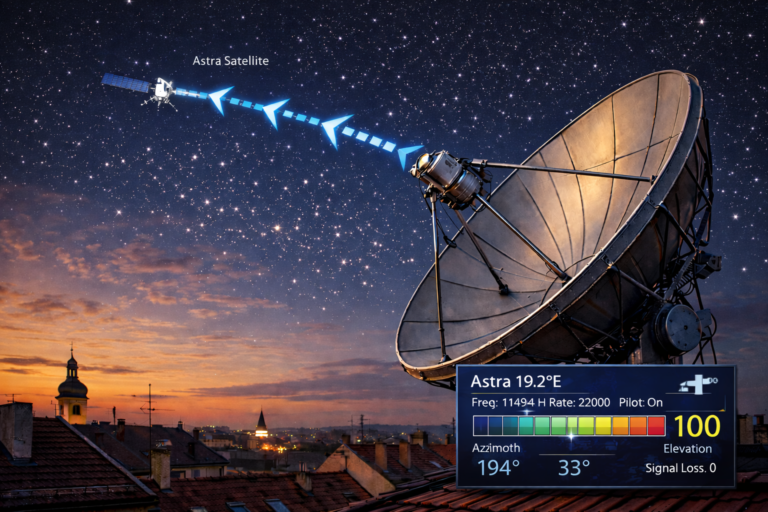
When satellite television expanded across Europe, viewers and broadcasters faced many choices. Different orbits. Different providers. Different promises. Over time, one position quietly became the default reference point. Astra 19.2°E. This article explains how that position evolved into Europe’s standard satellite for television.
Quick Context
This article focuses on historical adoption and market behavior rather than technical specifications.
Early Entry Into the European Market
Astra 19.2°E entered the European television market at a moment of growing demand. Households wanted more channels. Broadcasters wanted wider reach.
Early availability allowed Astra to establish relationships with broadcasters and platform operators before alternatives matured.
Building Momentum Through Adoption
Once a critical number of channels appeared on the same orbit, momentum followed.
Viewers preferred systems that offered variety. Broadcasters preferred orbits where audiences already existed. This feedback loop accelerated adoption.
Defaults emerge when enough people stop questioning the choice.
Concentration of Channels and Services
Astra 19.2°E accumulated a dense mix of free-to-air and subscription channels.
This concentration reduced the need for multiple dishes or complex setups. One orbit satisfied most viewing needs.
How Industry Standards Form
Standards are rarely announced. They form gradually through repeated use.
Receivers, dishes, and installation guides began referencing Astra 19.2°E as the primary target. Over time, this became normal practice.
Installer Influence on Default Choices
Professional installers played a major role in reinforcing Astra’s position.
By recommending the same orbit consistently, installers reduced risk and simplified support. Households trusted professional advice, further strengthening Astra’s status.
Why Defaults Are Rarely Replaced
Once a default is established, changing it requires strong incentives.
For most households, Astra 19.2°E already worked well. There was little motivation to experiment with alternatives. This created long-term lock-in.
Reality Check
Astra 19.2°E became Europe’s default TV satellite not through marketing alone, but through early adoption, industry alignment, and habit formation.
Final Verdict
Final Verdict
Astra 19.2°E earned its position as Europe’s default TV satellite by being present early, growing steadily, and becoming the easiest choice for both professionals and households. Once established, that default proved remarkably durable.
Frequently Asked Questions
| Question | Answer |
|---|---|
| What does default TV satellite mean? | It refers to the satellite position most commonly used and recommended across Europe. |
| Did Astra 19.2°E become default by design? | Partly. Early entry and consistent adoption played a major role. |
| Are there alternatives to Astra 19.2°E? | Yes, but most households never need to switch because their existing setup works. |
| Is Astra 19.2°E still the default today? | Yes. It remains the primary reference point for satellite TV across Europe. |