Sports Broadcasting in Europe | How Coverage Has Changed
Estimated reading time: 15–21 minutes
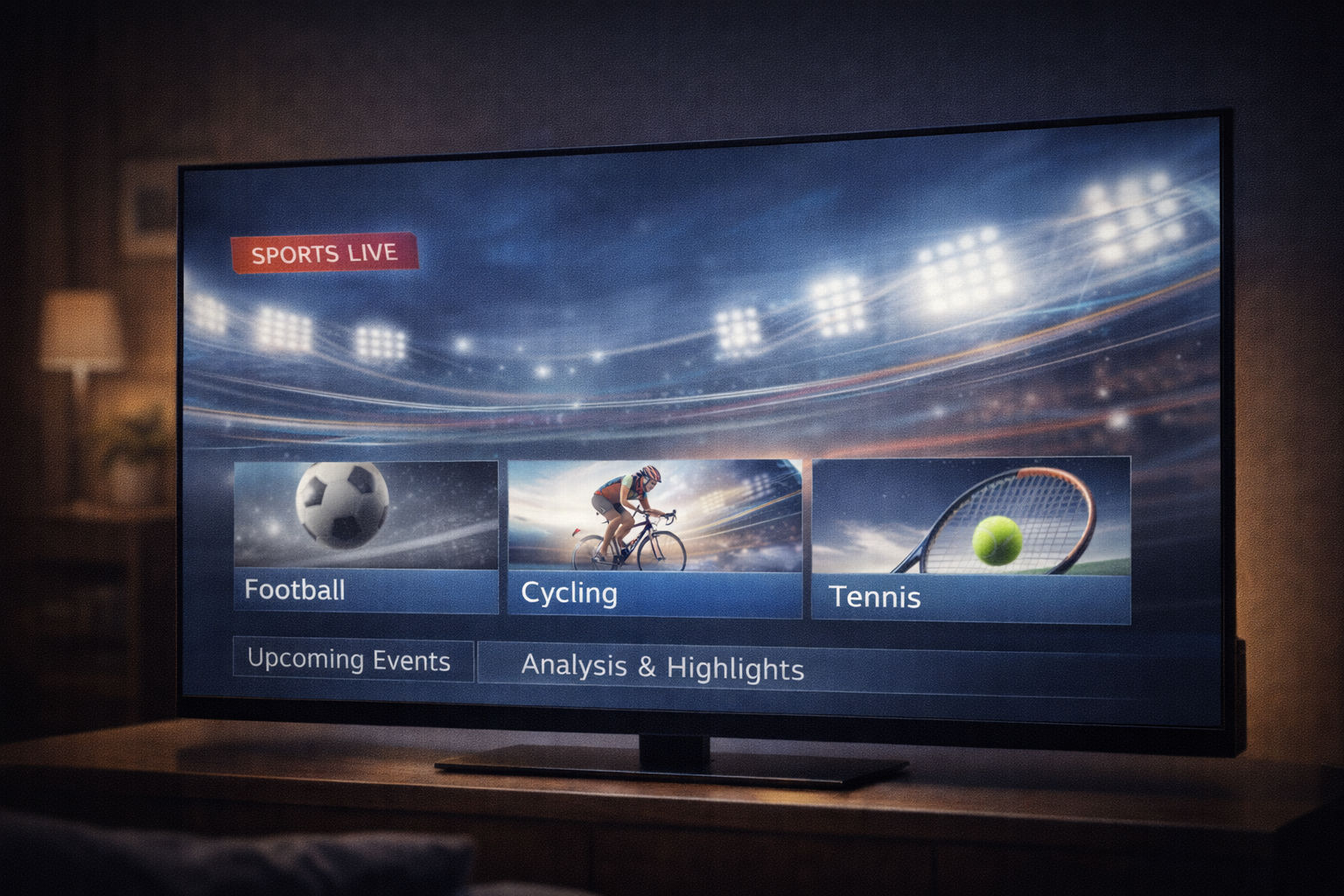
Sports broadcasting has always held a special place in European television. Unlike many other types of content, sports are experienced in real time, shared across households, cities, and even entire countries. Over the years, however, the way sports are covered on television has changed significantly.
In 2026, sports broadcasting in Europe looks very different from the past, yet it still serves the same core purpose: bringing live moments to viewers in a way that feels immediate, reliable, and shared. This article explores how sports coverage has changed, what stayed the same, and why live sports remain one of television’s strongest anchors.
Table of Contents
- Early days of sports broadcasting in Europe
- Why live sports shaped television culture
- Changing viewer expectations over time
- Evolution of visual presentation
- From simple commentary to deeper analysis
- Scheduled broadcasts versus flexible viewing
- The role of technology in modern coverage
- Hybrid viewing habits around sports
- Sports as a shared community experience
- How pace and focus have changed
- Why live sports still matter in 2026
- The future direction of sports broadcasting
- Reality Check
- Final Verdict
- FAQ
Early days of sports broadcasting in Europe
In its early years, sports broadcasting was simple. One camera angle, limited commentary, and a focus on the event itself. The goal was not analysis or entertainment layers, but access.
For many viewers, these broadcasts represented the first opportunity to witness major sporting events without being physically present. This accessibility laid the foundation for sports television culture.
Why live sports shaped television culture
Live sports introduced urgency to television. Unlike scripted content, sports could not be replayed or delayed without losing meaning.
This real-time nature created appointment viewing. Viewers planned their schedules around matches, reinforcing television as a shared social experience.
Changing viewer expectations over time
As audiences became more familiar with televised sports, expectations evolved. Viewers wanted clearer visuals, better explanations, and more context.
Coverage expanded to include pre-match discussions, post-match analysis, and storytelling beyond the final score.
Evolution of visual presentation
Visual presentation has changed dramatically. Multiple camera angles, slow-motion replays, and on-screen graphics are now standard.
These enhancements help viewers understand the game more deeply, without interrupting the flow of live action.
From simple commentary to deeper analysis
Early commentary focused on describing what viewers could already see. Modern sports broadcasting adds interpretation and insight.
Analysts explain tactics, highlight key moments, and provide context that enriches the viewing experience. This shift reflects a more informed audience.
Scheduled broadcasts versus flexible viewing
Live sports remain tied to schedules. However, flexible viewing options now surround the live event.
Viewers may watch highlights later, revisit key moments, or follow analysis after the broadcast. The live moment stays central, but access expands.
The role of technology in modern coverage
Technology supports sports broadcasting without replacing its core. Better cameras, clearer audio, and smoother transmission improve quality.
Importantly, technology serves the event, rather than becoming the focus itself.
Hybrid viewing habits around sports
Sports viewing in Europe is increasingly hybrid. Viewers combine live television with complementary digital experiences.
However, the live broadcast remains the anchor. It provides the shared reference point that other formats build upon.
Sports as a shared community experience
Sports broadcasting creates collective moments. Fans across regions watch the same events at the same time, sharing reactions and emotions.
This communal aspect distinguishes sports from most other content. It reinforces television’s role as a social medium.
How pace and focus have changed
Modern coverage balances excitement with clarity. While presentation has become faster, there is also greater focus on explanation.
The goal is to keep viewers engaged without overwhelming them. This balance reflects maturity in sports broadcasting.
Why live sports still matter in 2026
Despite on-demand culture, live sports remain irreplaceable. Their unpredictability, shared timing, and emotional intensity cannot be replicated fully elsewhere.
As long as sports are played live, television will remain essential to how they are experienced.
The future direction of sports broadcasting
The future of sports broadcasting lies in refinement rather than revolution. Coverage will continue to improve, but the live core will remain unchanged.
European sports broadcasting will likely keep blending tradition with modern expectations, maintaining its role as one of television’s strongest pillars.
Reality Check
Sports broadcasting has changed in form, but not in purpose. Live coverage remains the heart of how sports are experienced across Europe.
Final Verdict
Sports broadcasting in Europe has evolved to meet modern expectations while preserving the importance of live viewing. Its ability to adapt without losing its communal essence ensures its continued relevance in 2026.
FAQ
Has sports broadcasting changed significantly in Europe?
Yes. Presentation, analysis, and access have evolved, while live viewing remains central.
Why is live sports still important?
Because real-time unpredictability and shared experience cannot be fully replaced.
Do viewers prefer highlights over live sports?
Highlights complement live viewing but do not replace it.
How has technology influenced sports coverage?
By improving clarity and analysis without changing the core live experience.
Is this topic safe for AdSense and GEO?
Yes. The article is informational, neutral, and policy-safe.