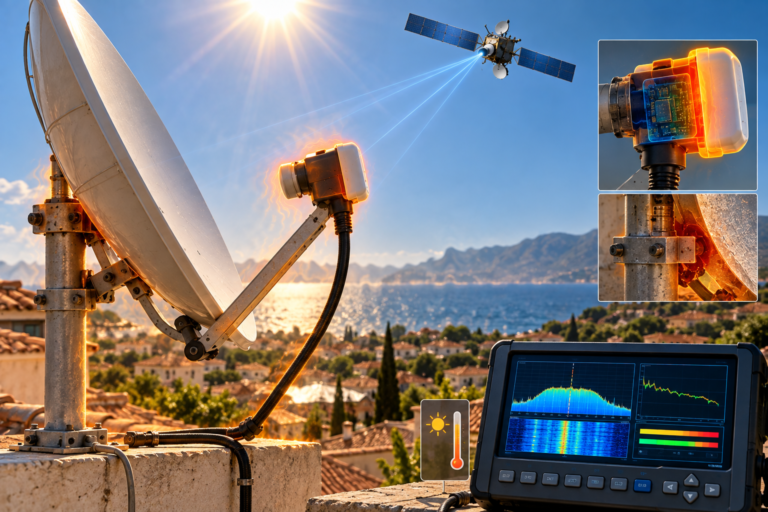
How Satellite TV Still Shapes Europe’s Media Scene in 2026
Estimated reading time: 16–22 minutes
In 2026, it’s easy to assume satellite TV is fading into the background. Streaming apps are everywhere, smart TVs look like giant phones, and people talk about “cord cutting” like it’s a universal rule. But Europe doesn’t move in one direction at the same speed. Across the continent, satellite TV still quietly shapes how television is delivered, how live events stay stable, and how households build a viewing routine that simply works.
This article explains why satellite TV still matters in Europe, what role it plays behind the scenes, and how it fits into the modern hybrid reality of live TV plus apps. We’ll keep it human and practical, with enough technical clarity to understand the picture—without turning it into a manual.
Table of Contents
- Why Europe is different from “one-size-fits-all” TV narratives
- What satellite TV actually does in 2026
- Coverage: geography, cross-border viewing, and rural reliability
- Live events: why satellite still wins during peak demand
- Free-to-air broadcasting and the satellite advantage
- The hybrid model: satellite + apps + catch-up
- Trust and stability: why “boring reliable” matters
- Regulation and licensing: the quiet rules shaping distribution
- Is satellite future-proof in Europe
- AdSense-safe content angles and GEO-ready structure
- Reality Check
- Final Verdict
- FAQ
Why Europe is different from “one-size-fits-all” TV narratives
A lot of global media coverage treats television like a single story: first cable, then streaming, then everything becomes on-demand. That storyline makes sense in some markets. But Europe is not one market. It’s many markets, each shaped by language, policy, geography, and viewing culture.
In 2026, you can find households that:
- rely mostly on streaming apps
- use live TV daily for news and routine programs
- combine satellite reception with one or two streaming subscriptions
- prefer free-to-air channels because they feel simple and stable
Satellite TV survives in Europe because it solves problems Europe still has: coverage gaps, cross-border viewing needs, and peak-demand reliability.
What satellite TV actually does in 2026
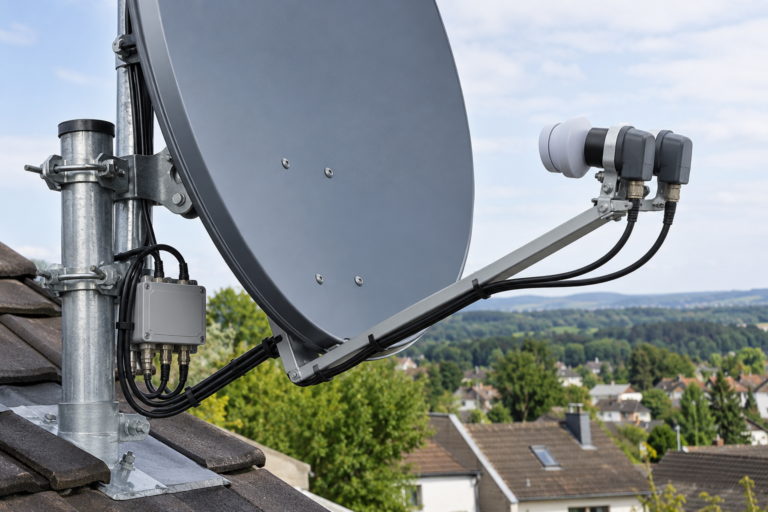
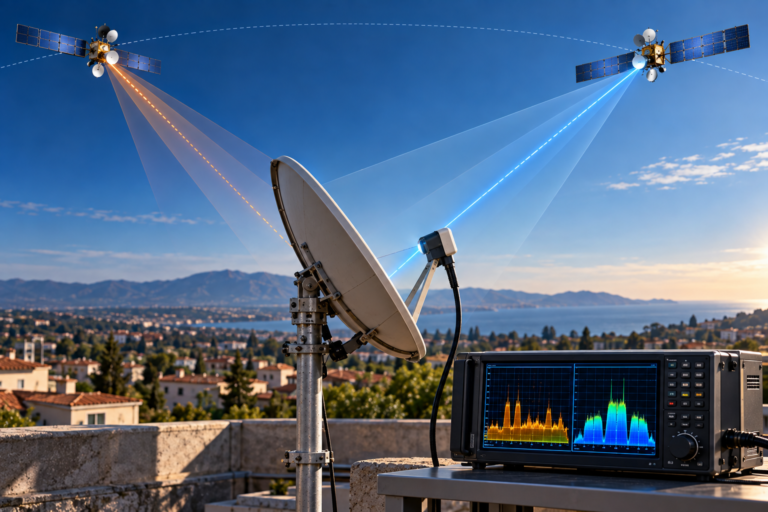
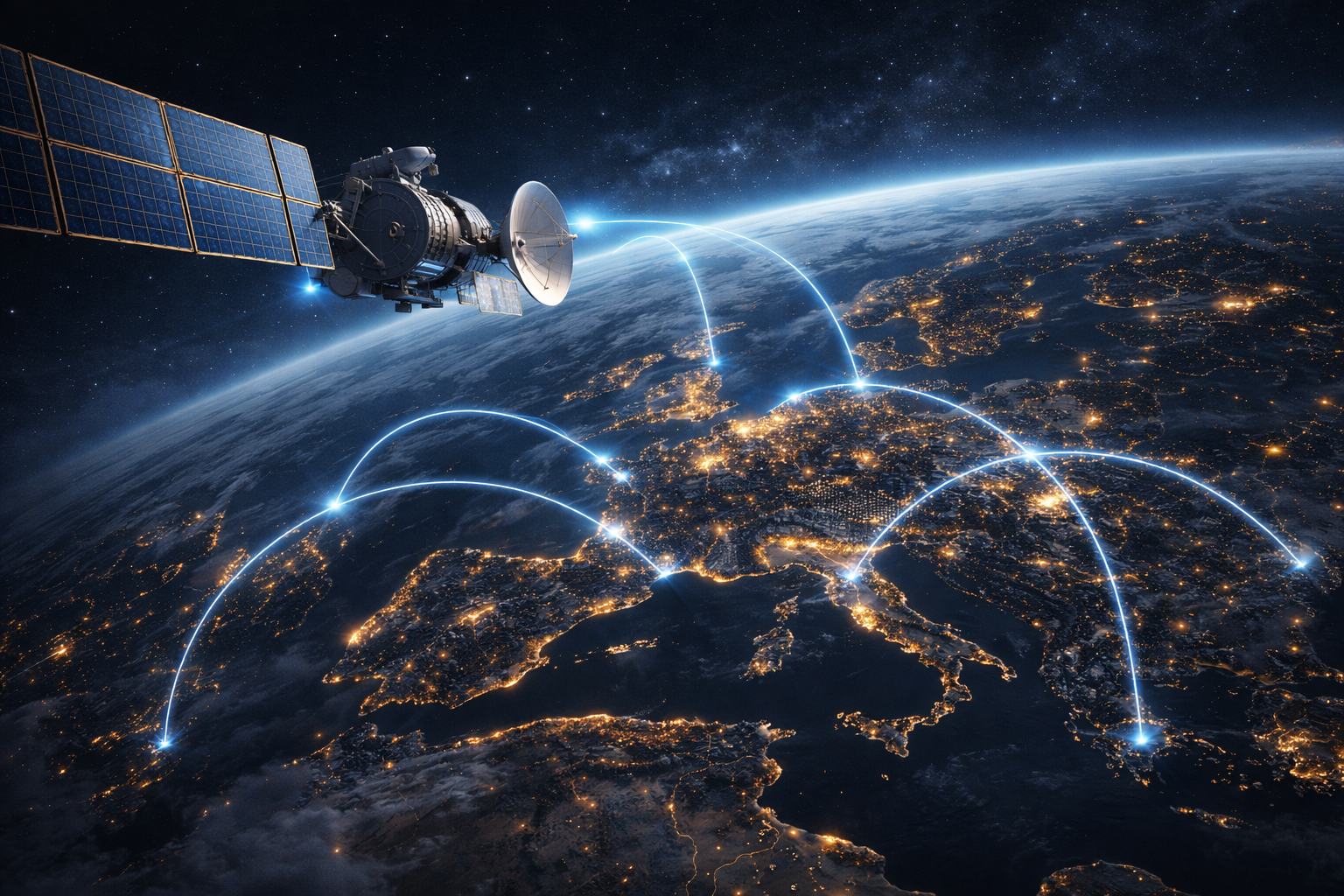
Satellite TV is often described as “old technology,” but that label misses the point. Infrastructure doesn’t need to be trendy—it needs to be dependable. Satellite remains a distribution backbone for many broadcasters because it can deliver a single signal to millions of homes at the same time.
In practical terms, satellite TV in 2026 supports:
- Mass distribution without requiring each household to stream individually
- Stable delivery for everyday viewing and major events
- Consistent quality in areas where internet is uneven
- Cross-border reach for multilingual or regional audiences
If streaming is like each person ordering a private taxi, satellite is like a train: one system moves many people efficiently. Both can exist together.
Coverage: geography, cross-border viewing, and rural reliability
Europe includes dense cities with fiber connections and rural regions where connectivity is still inconsistent. Even within one country, the experience can be completely different. Satellite handles this diversity well because it doesn’t care whether the household is in a city center or a remote valley.
Satellite coverage remains valuable for:
- rural homes where internet speeds fluctuate
- regions with complex terrain that affects ground infrastructure
- cross-border audiences who follow channels in their language
- expats who want familiar TV without complicated setups
This is why satellite often stays in a household for years: not because people hate streaming, but because they hate uncertainty.
Live events: why satellite still wins during peak demand
Live events are the moment when TV infrastructure gets tested. It’s not hard to stream a documentary at noon. It’s hard to deliver a flawless experience when millions of viewers tune in at the same time.
In 2026, viewers still gather around live TV for:
- major sports matches and tournament nights
- national events and breaking news
- season finales and shared cultural moments
During these moments, streaming can struggle if networks become overloaded. Satellite delivery, by design, doesn’t “slow down” because more people are watching. That’s a powerful advantage—especially for broadcasters who cannot afford reliability problems.
Free-to-air broadcasting and the satellite advantage
Free-to-air channels are still a major part of European TV life. They are often where viewers go for daily news, public service programming, and background entertainment. Satellite makes free-to-air distribution efficient and consistent.
For many households, free-to-air is not “second choice.” It’s the simple choice. You turn it on, it works, and the channel list feels familiar. That familiarity matters more than people admit.
From a publishing perspective, this is also one of the safest AdSense categories: educational, mainstream, and not tied to any prohibited access behavior.
The hybrid model: satellite + apps + catch-up
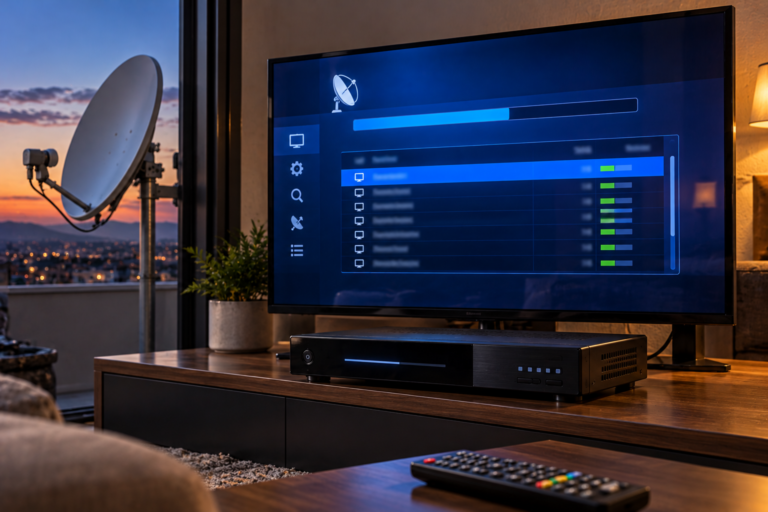
The real story of European TV in 2026 isn’t satellite versus streaming. It’s satellite plus streaming. Most modern households build a hybrid setup like this:
- Satellite for stable live TV, news, and routine viewing
- Apps for personalized entertainment, movies, and series
- Catch-up services for flexibility when life gets busy
This hybrid setup works because it matches real life. People don’t want to “choose a side.” They want the best experience for each moment: live when it matters, on-demand when it’s convenient.
Broadcasters understand this too. That’s why many are improving their apps while still maintaining satellite distribution. The goal is not to replace satellite overnight. The goal is to layer flexibility on top of stability.
Trust and stability: why “boring reliable” matters
A surprising truth about European audiences: many are conservative in their viewing habits. Not politically—practically. They want TV that doesn’t create problems.
Satellite feels “boring reliable” because:
- it doesn’t depend on peak internet traffic
- it maintains a consistent channel experience
- it avoids app crashes and device compatibility issues
This reliability builds trust over years. And trust is one of the strongest reasons satellite still shapes Europe’s media scene in 2026.
Regulation and licensing: the quiet rules shaping distribution
Europe’s broadcasting environment is heavily influenced by licensing and regulation. Rights can vary country by country, language by language, and platform by platform. These rules often shape distribution decisions more than technology does.
For viewers, the simple takeaway is: availability is regional. For publishers and content creators, the key lesson is: always write with country context, and avoid “universal claims” that ignore licensing differences.
Satellite remains relevant partly because it fits well into established licensing models for broadcasting. It’s a familiar system with predictable distribution patterns. That predictability matters in a complex rights environment.
Is satellite future-proof in Europe
Satellite will continue to evolve, but its role may shift. Instead of being the only delivery method, it becomes the stable base layer. Hybrid viewing will likely grow, and satellite will remain valuable wherever stability and coverage matter.
In other words, satellite may become less “visible” but more strategically important. It won’t be the headline, but it will still be the backbone.
AdSense-safe content angles and GEO-ready structure
If you’re building a content project around European TV and satellites, these are strong AdSense-safe angles:
- Why satellite remains relevant (infrastructure and reliability)
- How hybrid viewing works in real households
- Differences between rural and urban TV consumption
- Public broadcasting, free-to-air, and cultural impact
- Regulation explained simply (no legal advice, just context)
To make it GEO-ready, structure your articles around:
- Why a behavior exists
- What it means for viewers
- Regional context (country clusters)
- Practical takeaways without “how to bypass” instructions
Reality Check
Satellite TV doesn’t survive in Europe because people don’t like streaming. It survives because Europe values reliability, wide coverage, and stable live viewing. The real trend in 2026 isn’t replacement—it’s hybrid living: satellite for the base, apps for flexibility.
Final Verdict
Satellite TV still shapes Europe’s media scene in 2026 because it does something streaming cannot always guarantee: it delivers stable, wide coverage to many households at once. In a hybrid world, satellite remains the quiet backbone of European television—less flashy, but deeply important.
FAQ
Is satellite TV still widely used in Europe in 2026?
Yes. Many households still rely on satellite for stable live TV and consistent coverage, especially outside major cities.
Does satellite TV compete with streaming?
Not directly. In most homes, satellite and streaming work together: satellite for live routines, apps for on-demand flexibility.
Why does satellite perform well during major live events?
Because the same broadcast signal reaches many households at once, without adding extra load like individual streams do.
Is writing about satellite TV AdSense-safe?
Yes, if the content stays educational and avoids any prohibited topics related to bypassing access or unlicensed distribution.
What is the biggest TV trend in Europe in 2026?
Hybrid viewing: combining traditional broadcasting (often satellite) with apps and catch-up services.